Abigail Costigan, PEP Marine Conservation and Policy FellowContinue reading→
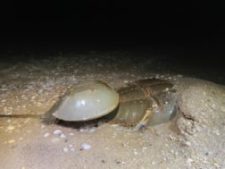

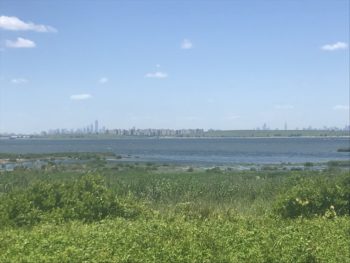
PEP has started its second season monitoring the diamondback terrapins on the East End of Long Island. Our terrapin interns, Kaitlin and Noah, are monitoring terrapin activity at Northwest Harbor County Park in Sag Harbor so we can begin understanding this species’ population and habitat out on the East End.
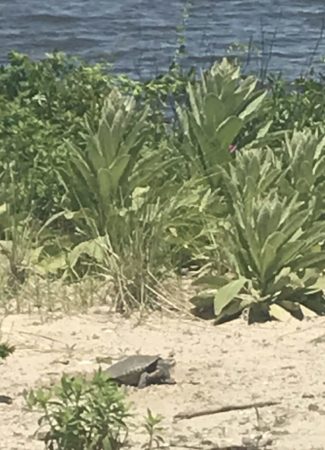
The terrapin interns and I got to spend an awesome day learning terrapin monitoring techniques and exploring the Jamaica Bay Wildlife Refuge alongside Dr. Russell Burke, local terrapin expert and professor at Hofstra University. I had never been to this refuge before, and neither had Kaitlin and Noah. Who knew there was such a beautiful haven for nature right outside the city! When we arrived, there were several birders out on the trail. We walked along the gravel for a while before we found Dr. Burke who was with a group of his volunteers, quietly watching a female terrapin laying eggs! The day was off to a great start. They had already seen several nests laid that morning, but this was our first time seeing a female in action!
We left this turtle to continue her nesting and followed Dr. Burke to a nest that was laid previously that morning. He was going to excavate (a fancy word for “dig up”) this nest for two reasons: to count and weigh the eggs, and to add a device called a temperature logger. This device records the temperature of the nest over a period of about 90 days, and the data is retrieved when the device is dug up and plugged into a computer.
Did you know that the temperature of a turtle nest can determine whether the hatchlings are male or female? Unlike birds and mammals whose sex is determined by chromosomes, many types of turtles are influenced by temperature. This is called “temperature-dependent sex determination.” Warmer temperatures typically lead to clutches (batches of eggs) with more females, while cooler temperatures lead to more males. I once heard someone say the way to remember this is “hot chicks and cool dudes.” The pivotal temperature varies between species, and it’s something that Dr. Burke has been researching.
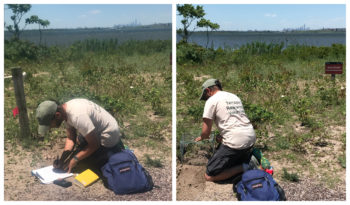
After the eggs were weighed and put back, the temperature logger added, and the nest filled in, Dr. Burke took an extra measure to protect the nest from predators. The “predator exclusion device” is made from chicken wire and prevents raccoons and other hungry predators from getting into the terrapin nest. Later in the season, Dr. Burke and his volunteers will cut holes in the bottom of these devices so the hatchlings can escape safely.
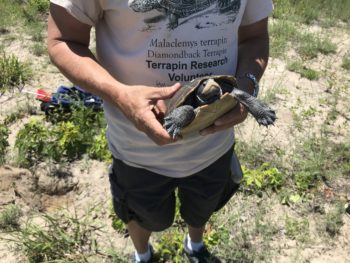
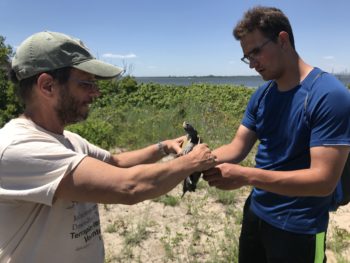
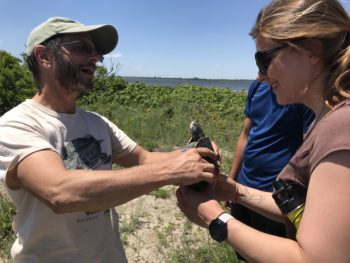
On our way over to the research station, we were met by a couple of volunteers who found a female terrapin. Dr. Burke showed us how we can feel for eggs on the side of the terrapin’s body (see above). This one had laid her eggs already.
Then this female got to experience a little bit of pampering – she got a fresh coat of nail polish! This is a helpful practice because it can show observers from afar that a turtle has already been caught and measured already. If a volunteer sees a turtle with nail polish on its shell, they will know not to bother her because they already have the data on that individual turtle. All they have to do is watch her to see if she lays eggs and then mark the nest when she is done.
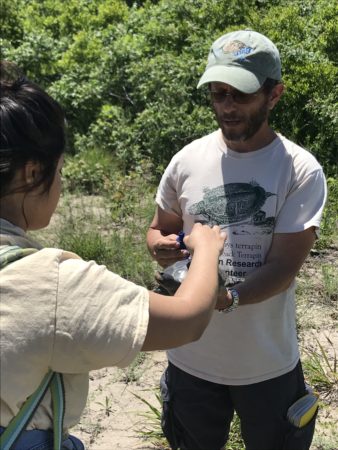
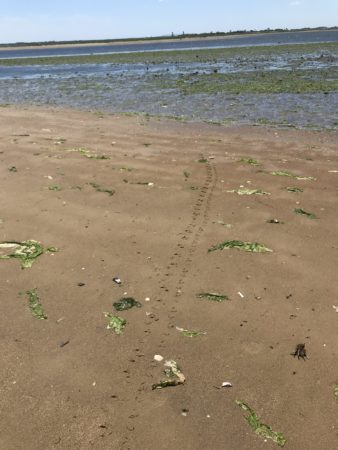
After that, we walked along the beach to head to the research station. We passed “Terrapin Cove” which is a spot where volunteers wait to see terrapins coming up from the water. We also saw some terrapin tracks!
We had so much fun learning from Dr. Burke and observing what he and his volunteers do on a daily basis. It certainly gave us a lot of useful insight for our own terrapin monitoring program on the East End. We hope that one day, our project will grow and we will be up to Dr. Burke’s level! Until then, we will continue our terrapin monitoring out in Northwest Harbor County Park in Sag Harbor, and maybe expand to other locations in the Peconic Estuary in the near future.
Abigail Costigan, PEP Marine Conservation and Policy FellowContinue reading→

Plastic bag ban is an instrumental step to making our environment cleaner and our wildlife safer.Continue reading→

Watch this PEP presentation to learn about the projects we do and how you can get involved. During National Estuaries Week, we celebrate Estuary Day with Long Island Sound Study and South Shore Estuary Reserve to bring awareness to the work that we do as the Estuary Programs on Long Island and how you can...Continue reading→
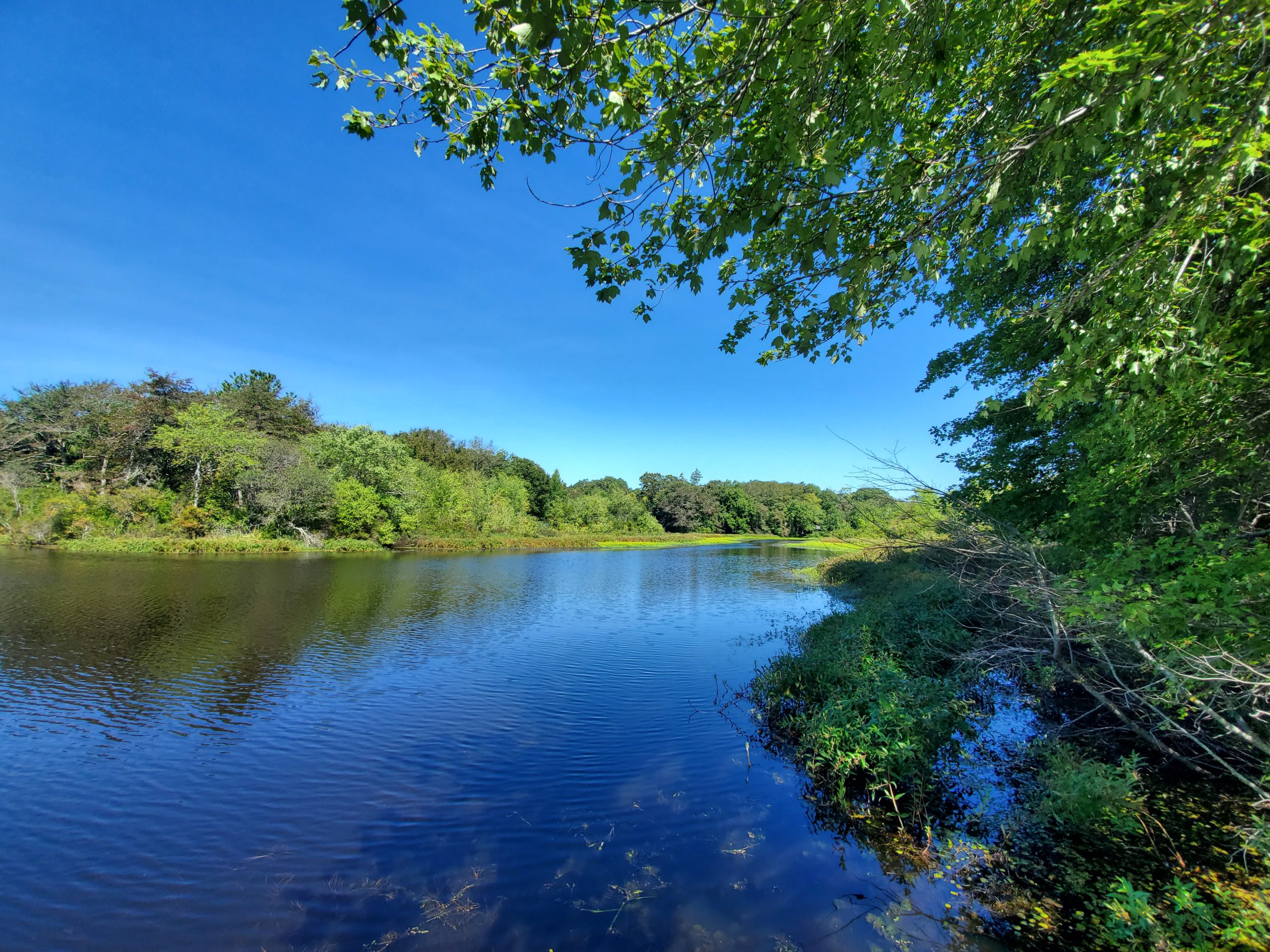
Suffolk County presents a workshop on the Septic Improvement Program at PEP’s August 2020 Citizens’ Advisory Committee Meeting. Learn what the program entails, how to apply, and feel equipped to take the next steps in upgrading your cesspool or septic system for cleaner water quality.
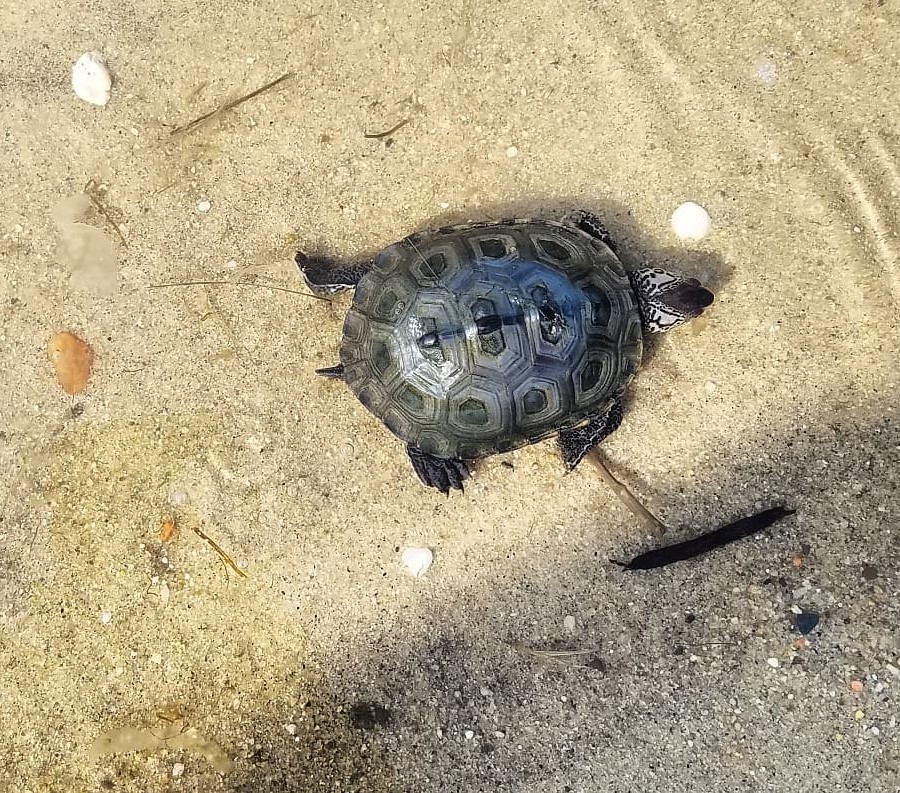
The Peconic Estuary Partnership, Seatuck Environmental Association, and Dr. Russell Burke of the Jamaica Bay Terrapin Project of Hofstra University hosted a virtual terrapin monitoring workshop where attendees learned about the importance of monitoring and how to identify terrapins and evidence of their activity. The workshop concluded with the unveiling of Seatuck’s Diamondback Terrapin Watch, which is an online survey...Continue reading→

Watch our May 2020 Citizens’ Advisory Committee Meeting co-hosted with Group for the East End, with guest speaker Rusty Schmidt, President of Long Island Native Plant Initiative (LINPI). Learn all about native plant species, where you can buy native plants, and how to get started on your garden. Native plants do not require fertilizer or...Continue reading→

Due to the coronavirus (COVID-19) outbreak, the PEP offices are closed and all in-person meetings, events and activities are postponed until further notice to help reduce the spread of COVID-19. PEP staff are working remotely and can be contacted via email. As always, we will continue to share information about the Peconic Estuary through our...Continue reading→
2020 brings exciting news for the Peconic Estuary Program – a new name that better reflects the program and a soon-to-be launched revised Comprehensive Conservation Management Plan that includes fresh goals and actions for the next decade. As a National Estuary Program, the PEP brings together all members of the community – Federal, State and...Continue reading→

The Peconic Estuary Partnership, in response to the adult scallop die-off in the Peconic Bays convened a group of scientists, regulators and experts to assess the known and unknown factors that may have contributed to the demise of the Peconic Bay scallops in 2019 in the Peconic Estuary. This group, the Peconic Bay Scallop Technical...Continue reading→
February 21, 2020 PECONIC BAY SCALLOP TECHNICAL REVIEW COMMITTEE PROVIDES UPDATE ON THE 2019 ADULT BAY SCALLOP DIE-OFF In light of the recent information released regarding the work led by NYSDEC and the Marine Animal Disease Lab at Stony Brook University, the Peconic Bay Scallop Technical Review Committee would like to give the following update...Continue reading→
Sign up for News, Events and Information straight to your inbox.
