
The Peconic Estuary's unique shallow and deep water zones, formed over thousands of years, provide habitat for a range of plant and animal species.
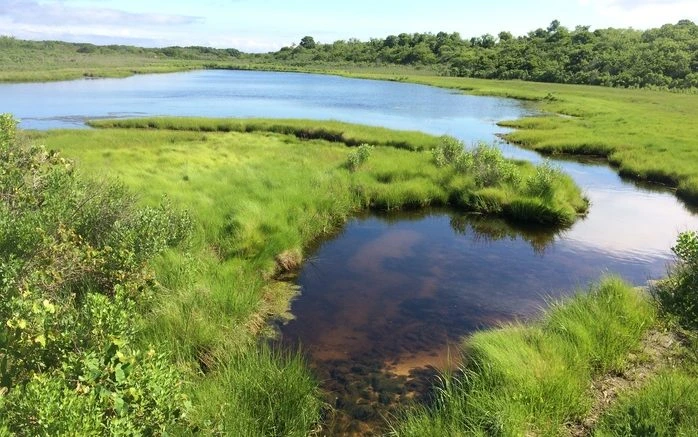
The deep-water zone is characterized by water depth greater than 3 meters (approximately 10 feet).
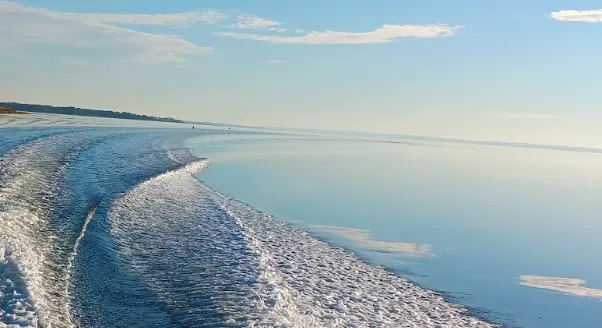
The deep, open waters contain a large portion of the adult fish that are harvested commercially or recreationally in the Peconic Estuary System.
These waters are also an important nursery area for many species of fish, such as:
Many of these species may seasonally or diurnally move back and forth between the deep and shallow water zones.
A number of invertebrates live in the deep waters of the Peconic Estuary, including:
Additionally, on the mud bottoms, there are dense mats of tubes built by polychaete and oligochaete worms. These and other bottom burrowers, like the mantis shrimp and brittlestar, help to circulate oxygenated water into the oxygen-depleted mud sediments of the deep Peconic bays.
The deep-water zone is used by a variety of birds for feeding.
Notably, sea ducks such as red-breasted mergansers, three species of scoters (Melanitta perspicillata, fusca, and nigra), and common eiders are especially common in the Peconic Estuary.
Sea ducks feed and rest in deep, open coastal waters and rarely, if ever, come to shore. The sea ducks do not breed and rear their young in the Peconic system but use it exclusively as an over-wintering site. These waterfowl are found in high concentrations during the early months of the year at a number of sites. They feed primarily on shellfish such as blue mussels and other bottom dwelling invertebrates.
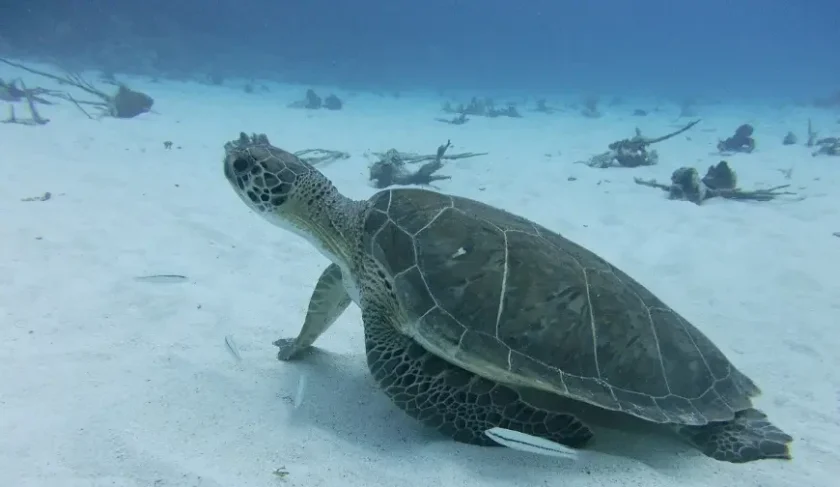
Several threatened or endangered sea turtles can be found seasonally in the deep water zone of the Peconic Estuary.
Juvenile loggerheads, Kemp’s ridleys and green sea turtles may enter the Estuary from late spring to early fall to feed.
A number of pinnipeds (seals) and cetaceans (whales, dolphins, and porpoises) can found in the Peconic Estuary.
The most common species of pinnipeds found in the Peconic are harbor seals, with harp and grey seals being less common. . These seals are found in association with a number of haul-out areas around the eastern Peconic Estuary and Block Island Sound. During the spring and summer months, harbor porpoises, bottlenose dolphins, and minke whales may enter the estuary to follow their food source (primarily herring and squid) into our coastal waters.
This zone is defined as those waters in the main bays with a depth of less than 3 meters (approximately 10 feet). The shallow water zone also includes portions of tidal creeks, ponds, and large embayments in the Peconic Estuary that remain submerged through the tidal cycle.
The shallow water zone of the estuary is crucial for local populations of breeding fish.
Some species of adult finish move in close to shore to spawn and reproduce, such as:
Other spawn in the ocean with larvae moving inshore, metamorphosizing, and creating juveniles that feed in shallow areas until they are large enough to migrate back offshore, such as:
Additionally, the shallow water zone supports the majority of commercially harvested shellfish, including the iconic bay scallop and the hard clam.
There are more birds feeding the shallow water zone than in the deep-water zone.
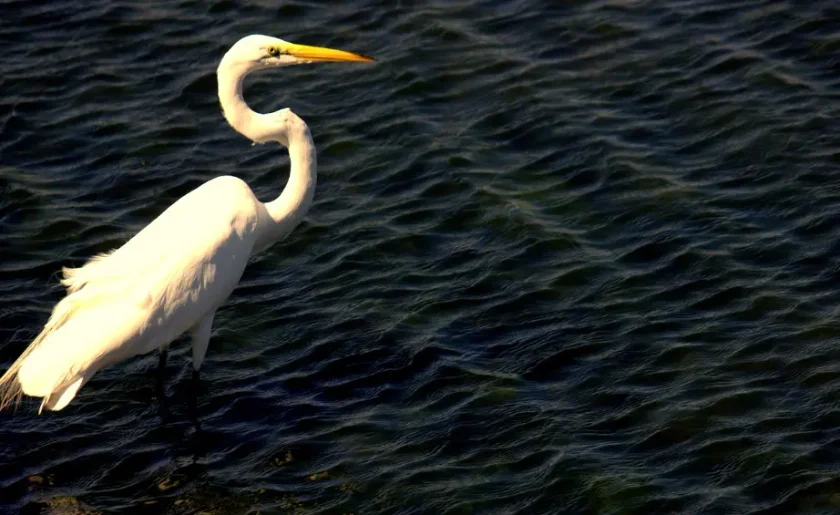
Birds in this zone consisting of waders, such as:
Puddle ducks (also called ‘dabbling ducks’) are usually in found in shallow embayments and frequently feed on land as well as in the water. Black ducks and mallards are examples of puddle ducks. Bay ducks are similar to sea ducks in that they spend most of their time offshore, but they remain in fairly sheltered embayments. Shorebirds (e.g., least tern and roseate tern) also depend on fish in these areas for food.
Most of the beds of submerged aquatic vegetation are found in the shallow water zone. Submerged aquatic vegetation is defined as beds of rooted vascular plants or macroalgae, both of which require complete immersion for all or most of the day to survive.
Submerged aquatic vegetation, particularly eelgrass, is of great ecological importance in shallow environments. Eelgrass beds provide shelter and food for a variety of juvenile finfish and invertebrates, most notably juvenile bay scallops which attach to the eelgrass blades. Shelter is provided not only by the actual structure of the eelgrass blades but also by the fact that eelgrass beds slow currents. These rooted plants stabilize the underlying substrate and prevent scouring and erosion.
Macroalgae beds are generally considered poorer habitat compared to eelgrass. Since macroalgae are not rooted, they do not stabilize soft bottoms. Rather, they are easily uprooted and can be carried some distance where they foul eelgrass beds, beaches, and bare bottoms. The macroalgae species that occur in greatest abundance in the Peconic Estuary are:
Additionally, fishermen have reported bay scallops in areas of green fleece in the western portion of Peconic Bay.
This zone includes all areas around the edge of the estuary that are periodically inundated by tides or impacted by storm surges. This zone includes habitats impacted by daily tidal fluctuations including salt marshes, mud and sand flats, and beaches. Entire invertebrate communities are associated with almost exclusively with intertidal areas.
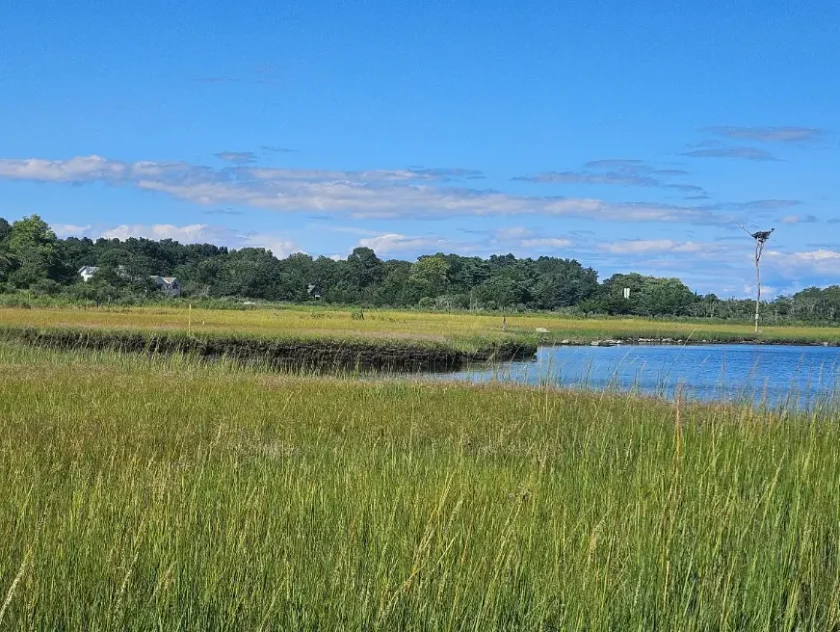
Salt marshes are vegetated areas around the edge of the estuary.
Salt marshes are inundated by seawater brought in by tides twice-daily. The low marsh is domianted by salt marsh cordgrass (Spartina alterniflora), a plant that is specifically adapted to living in this unique environment.
Marshes play an important role in estuarine ecology, being some of the most productive habitats on Earth as well as serving as important areas for juvenile fish and invertebrates to grow and reproduce.
Salt marshes are home to the diamondback terrapin, an exclusively estuarine reptile that lives in the marsh but lays their eggs in soft sand, usually at the upper margins of the marsh and beaches.
Tidal flats are unvegetated intertidal areas consisting of mud or sand and often covered by algae.
Animals that live in tidal flats include several commercially important bivalves, such as oysters, clams, crabs (predominantly fiddler crabs), snails, and worms. These areas may also be used by finfish for spawning and nursery grounds with the adults, larvae, and juveniles moving on and off these unvegetated areas with the tides.
Wading shorebirds and birds of prey will feed over the mud and sand flats at high, as well.
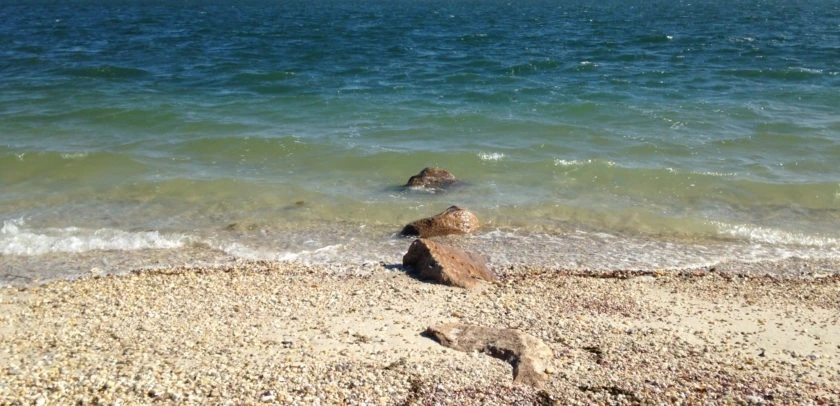
Beaches are dynamic environments that are continuously being accreted and eroded by waves, wind, and currents.
Sandy beaches are found throughout the Peconic Estuary system, with dunes or bluffs forming on the landward side of some beaches.
The unstable and harsh environment of beaches limits the number of organisms that can live here. However, beaches are home to a variety of rare plants that are exclusively adapted to these nutrient-poor environments. Additionally, tiny animals live between the sand grains.
Nevertheless, a number of species will feed on the band of dead, washed up vegetation, shells, and debris found near the high tide line. This is otherwise known as ‘beach wrack.’
Lastly, beaches provide important nesting and breeding habitat for horseshoe crabs as well as two endangered shorebirds: the piping plover and roseate tern.
The freshwater environment is crucial to the Peconic system, because the influx of fresh water makes the ‘brackish’ water that is characteristic of the Peconic Estuary. A mix of fresh and saltwater is vital for the growth and development of many species, some which cannot survive in very salty seawater.
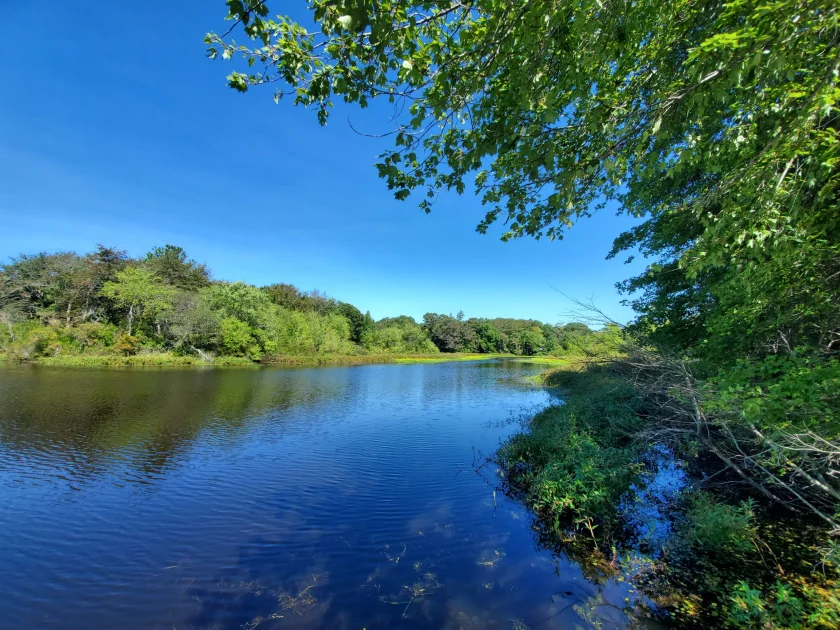
The Peconic River flows from west to east, from the Town of Brookhaven to Flanders Bay and into the westernmost bay of the estuary.
At fifteen miles long, the Peconic River is the longest river on Long Island. The Peconic River is the main source of freshwater to the estuary system, with many freshwater streams and creeks within the Peconic Estuary. Additionally, the Peconic River also provides crucial spawning and nursery grounds for diadromous fish migrating from the marine environment upstream. Without the Peconic River, hundreds of thousands of alewife and American eel would be able to complete their life cycles.
Freshwater wetlands can include coastal plain ponds, vernal pools, bogs, fens, and swamps, all of which occurs within the Peconic Estuary boundaries.
Animals that live in tidal flats include several commercially important bivalves, such as oysters, clams, crabs (predominantly fiddler crabs), snails, and worms. These areas may also be used by finfish for spawning and nursery grounds with the adults, larvae, and juveniles moving on and off these unvegetated areas with the tides.
Wading shorebirds and birds of prey will feed over the mud and sand flats at high, as well.
Fish
The freshwater habitats of the Peconic Estuary supports a number of warm-water fishes such as:
The upper reaches of the Peconic River are home to many restored fish passages for diadromous fish to migrate between fish and marine waters. Diadromous fish like river herring and American eel typically return to freshwater to spawn, carrying important nutrients and serving as prey for important commercial and recreational fish species, migratory birds, and mammals. River herring populations have been declining for the past century on Long Island in part due to migration barriers like dams and road culverts that block access to important freshwater habitat. Completed Peconic River fish passages have restored over 200 acres of habitat for diadromous fish!
Additionally, the Peconic freshwater habitats support a number of other rare and endangered plants and animals, including various salamanders, frogs, turtles, and birds. The Peconic River basin and a few other surrounding ponds provide critical habitat for the State listed endangered tiger salamander.
The terrestrial zone starts landward of habitats that are inundated by tides but not including the Peconic River, freshwater wetlands, and ponds. There are a number of characteristic plant communities occurring in this upland coastal zone around the estuary, wherein soil type, hydrology, and microclimates determine the occurrence of these communities.
Forests are the largest terrestrial ecosystem of Earth by area, with New York State specifically being 61% covered in forests.
Forest types within the Peconic Estuary include:
The Central Pine Barrens are Long Island’s most significant wilderness and is the largest remnant of a primarily forested area thought to have once encompassed more than a quarter million acres. In the Central Pine Barrens, pitch-pine oak is the dominant plant community, but there are also rare dwarf pitch pine plain communities, where co-dominant trees grow no greater than three meters in height together.
Grasslands are habitats where the vegetation is dominated by, you guessed it, grasses! They are generally open, continuous, and fairly flat areas. Here in the Peconic Estuary, grasslands are deemed ‘coastal upland plant communities.’
Maritime grasslands in the Peconic Estuary are primarily found in Peconic Estuary at Conscience Point, Montauk, and the Shinnecock Hills whereas maritime heathlands are found at Montauk Mountain. Both of these communities consist of tall grasses and shrubs with a notable lack of tall, large trees.
All these plant communities contain numerous insects, birds, and other organisms, which are specifically adapted to them. Many vascular plants and several birds and insects found in the terrestrial zone have been identified as threatened, endangered, or species of special concern.
Sign up for News, Events and Information straight to your inbox.
