
Learn about the benefits of living/ natural shoreline here and check out our progress on the Suffolk County Marine Environmental Learning Center Living Shoreline project in Southold.
With coastal inundation and the potential for more frequent and stronger storms, many property owners on the east end of Long Island have been installing bulkheads, sea walls, as well as other hard shoreline structures to protect their property. Unfortunately, these hard structures can have negative consequences for the environment and wildlife, and can worsen coastal erosion and flooding, putting local properties at risk.
Hardened shorelines reduce habitat and nursery grounds for native plants, fish, and wildlife, exasperate erosion, and lead to shoreline destabilization over time.
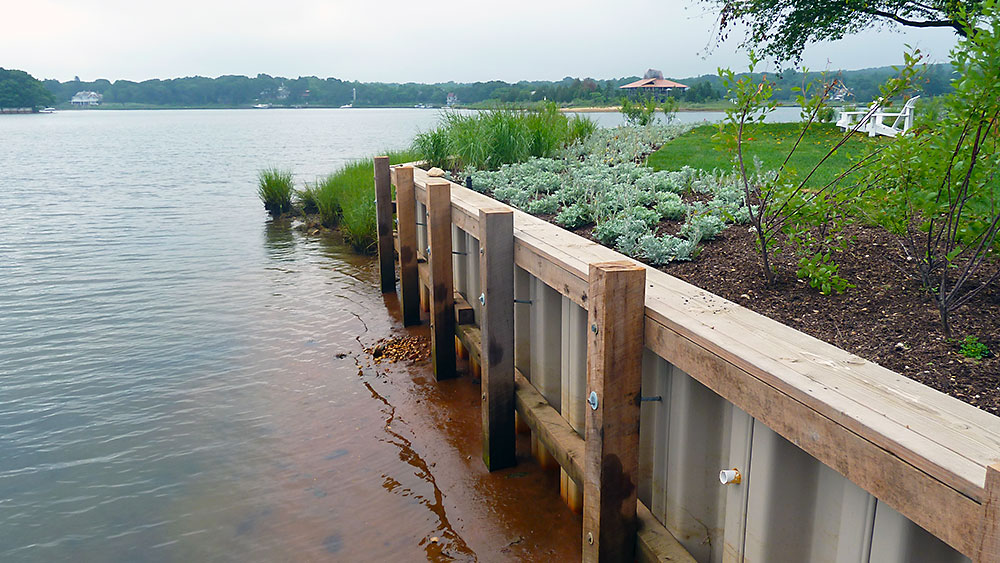
PEP’s Hardened Shoreline Assessment was validated in 2025.
Conclusion
The impacts of hardened shorelines are well established. Developing alternative forms of shoreline protection that do not negatively impact shorelines, while also providing benefits to our coastal ecosystem, is a top priority for PEP.
‘Living shorelines’ are a beneficial alternative to hardened shorelines. These nature-based shorelines use native plants, shellfish, and other natural features such as rocks, sand, wood, coconut fiber, and shells to stabilize and protect coasts and decrease direct wave energy. Nature-based shorelines are designed to mimic the natural environment and provide ecological benefits.
Benefits of Living Shorelines
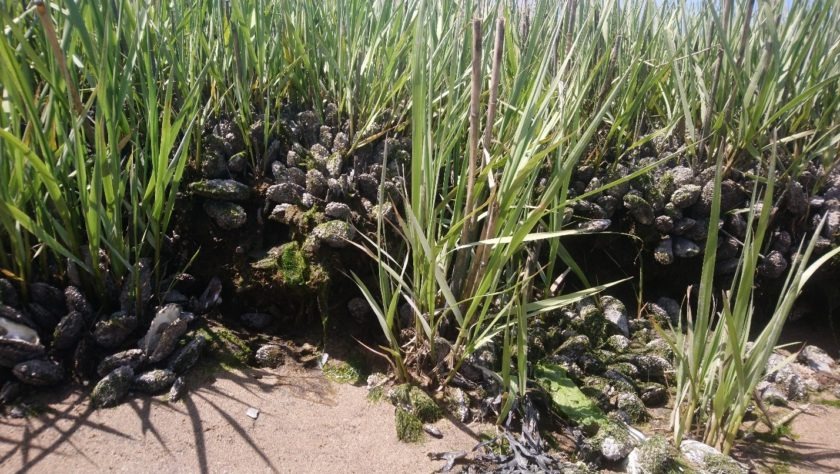
Rocks of varying sizes are commonly used for shoreline protection. This particular location experiences minimal wave action; therefore, smaller sized rocks were used for sediment stabilization. This site demonstrates the appropriate use of small rock in place of a hardened structure or large boulder rock revetments.
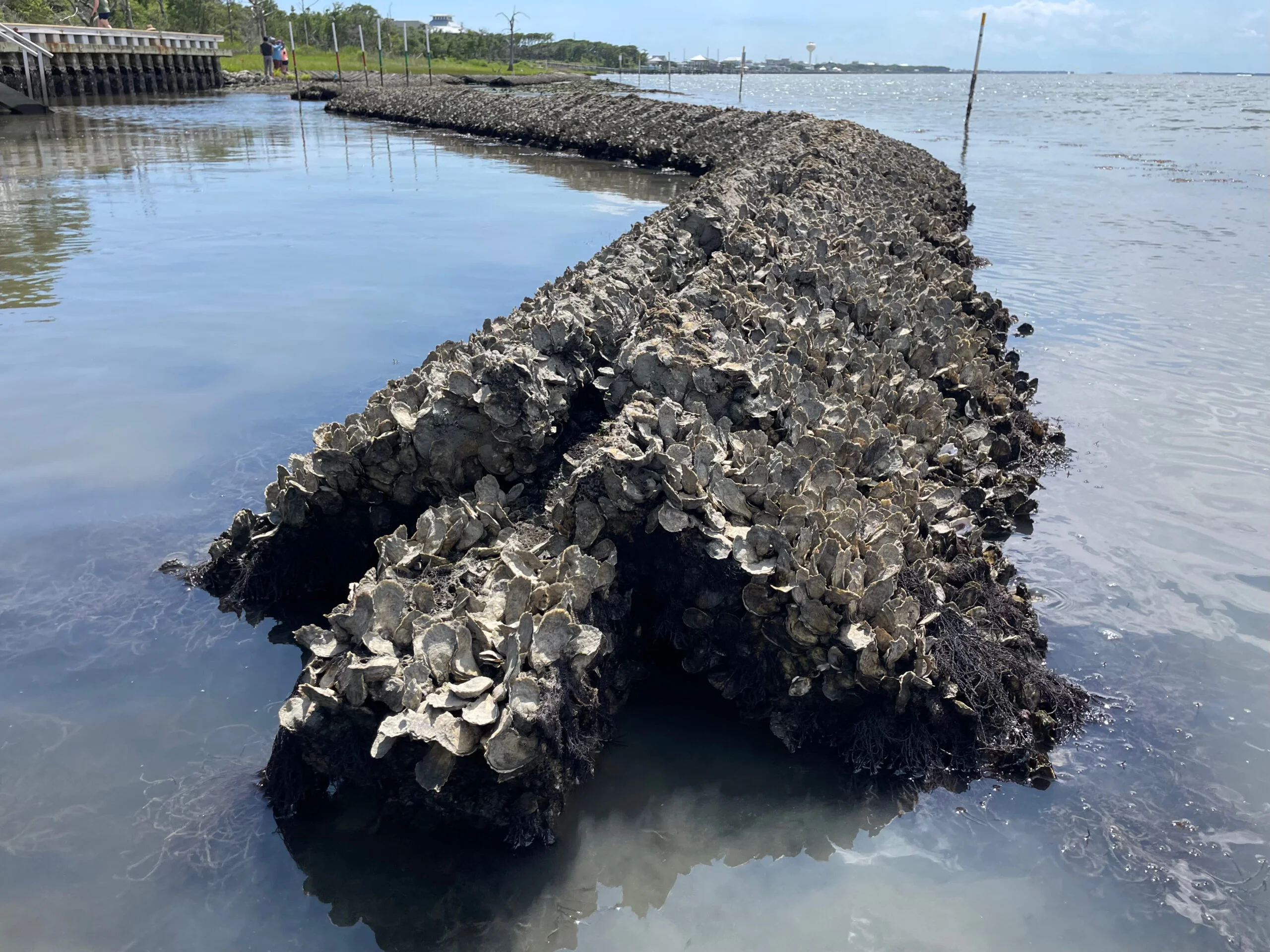
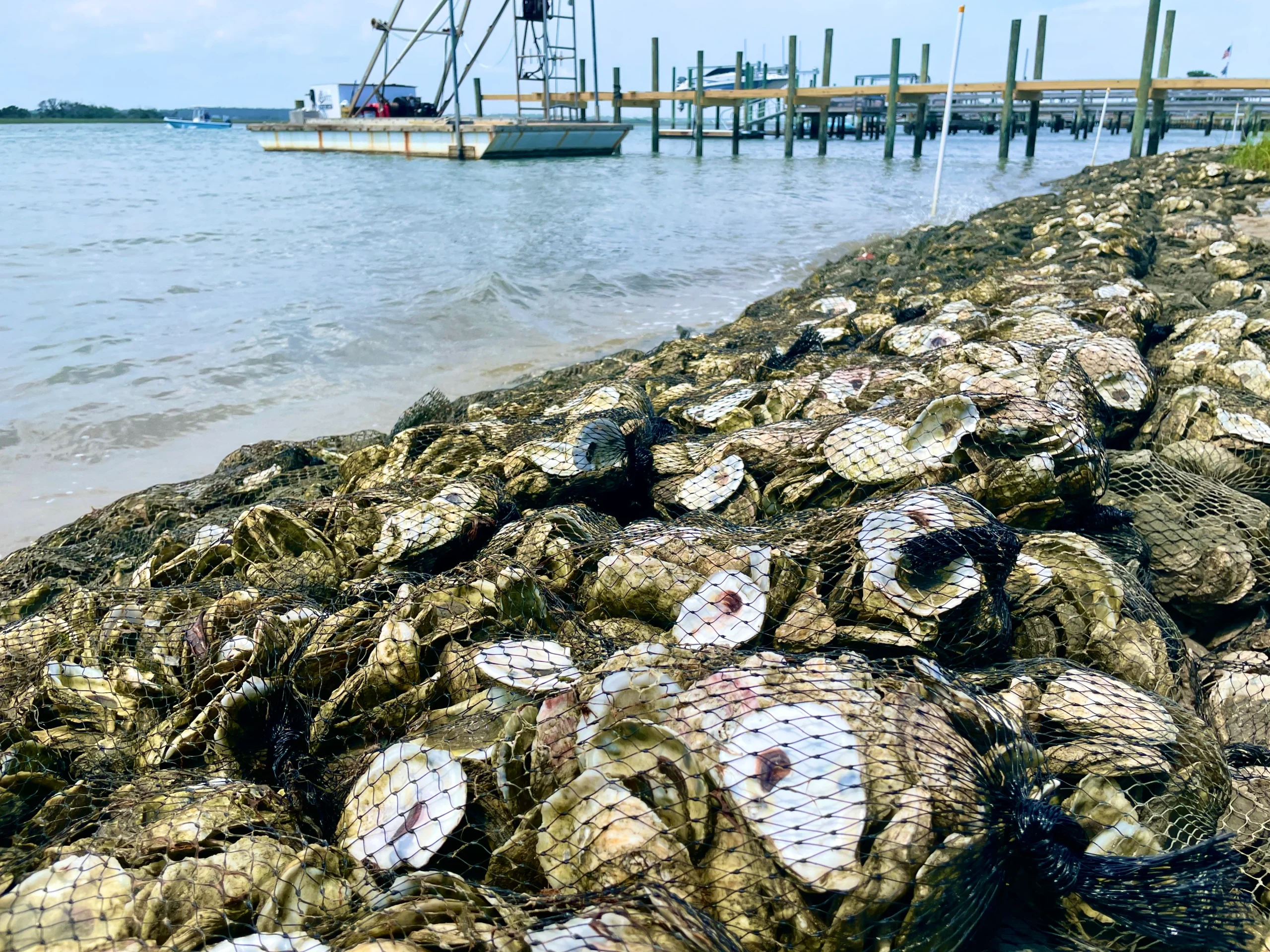
Shell is a naturally occurring marine material that has been used extensively for creating underwater reefs and to protect shorelines from wave and storm energy.
Shells derived from oyster and clams are placed inside biodegradable mesh bags and stacked to create a wall-like barrier along the shoreline. Additionally, the calcium carbonate in shell may also help acting as a buffer to maintain a proper pH level for the waterbody.
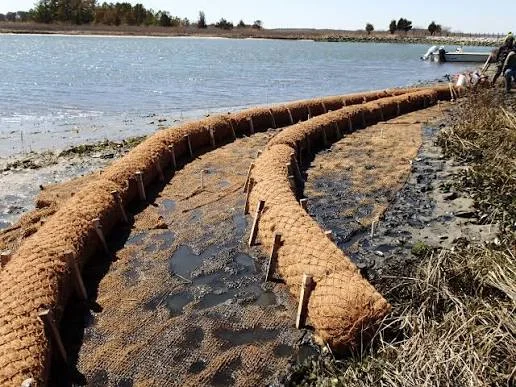
Coir logs are commonly used for erosion control in shoreline projects. Consisting of interwoven coconut fibers encased in a natural, hemp net casing, coir logs are fully biodegradable and resilient. This provides at least 2 years of stabilization before breaking down; typically, this is enough time to establish a band of vegetation behind the logs, which will provide the erosion control once the coir logs have been degraded. .
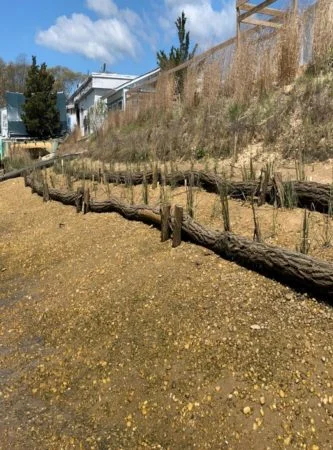
Historically, natural wood terracing has been used to stabilize steep slopes. Terraces are created using short walls of wood to help absorb wave energy and hold a platform of sediment in place behind them.
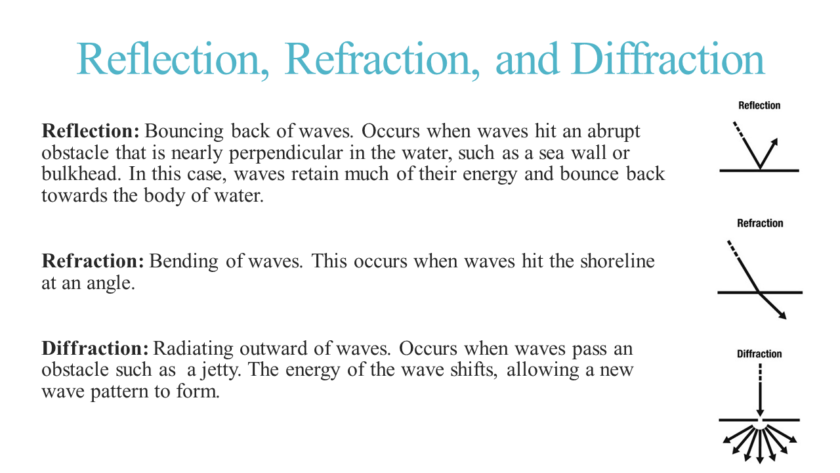
Unlike a conventional bulkhead, these shorter walls do not reflect wave energy, block landward migration of marshes, or cause the other issues associated with hardened shorelines. Instead, water is able to wash over each terrace and wave energy is absorbed while steep slopes are stabilized and protected from erosion.
