Abigail Costigan, PEP Marine Conservation and Policy FellowContinue reading→

By Kaitlin Morris
It was after two in the morning and so foggy that I could hardly tell the moon was full through the warm, hazy air. It was a horseshoe crab monitoring night and my fellow intern, Julie, and I were walking along the shoreline at Squires Pond, Hampton Bays in search of mating pairs of these amazing marine animals. I was excited to experience marine science and conservation first hand as an intern for Peconic Estuary Program, and walking on the beach in the middle of the night made it all the more fun.
As a life-long resident of the East End and after many years of studying marine science and conservation throughout college, I knew that interning with Peconic Estuary Program as my capstone project for my master’s degree in Marine Conservation and Policy would help bridge the gap between grad school and a full time job. I applied for my summer internship with PEP hoping for either a position as a horseshoe crab monitoring intern or as a diamondback terrapin monitoring intern, but was thrilled that I was able to take on both!
During this foggy May early morning, marching along the dark beach in search of spawning horseshoe crabs, I realized how thrilling it was to be in that place: recording data, measuring and tagging horseshoe crabs, and releasing them back into the Peconic Estuary—all while leading citizen science volunteers who stayed up extra late to be part of this project. Here I was, making a real difference in a hands-on way, working with wildlife, and educating the public. How could it get any better?
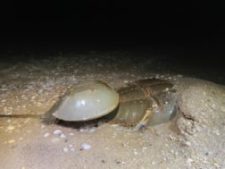
Horseshoe crabs are a fascinating and important marine species. Every May, Atlantic Horseshoe Crabs (Limulus Polyphemus) come ashore during the new and full moon high tides to mate and lay their eggs in the sand along the coasts, including the shores of the Peconic Estuary. Their eggs are not only important for hatching baby horseshoe crabs, but also for feeding migrating shorebirds, such as the Piping Plover. As the shorebirds migrate, they stop down in our region and feed on energy-rich horseshoe crab eggs they find buried along the shoreline. Without horseshoe crabs, these migrating birds would be very hungry!
Concern about the horseshoe crabs has risen in recent years because their coastal habitat—where they lay their eggs—is decreasing. As people build homes and businesses along the coasts, there’s a lot less room for the horseshoe crabs to safely lay their eggs. They are also harvested by fishermen, who use them as bait for other popular species. With so many threats facing the horseshoe crabs, and therefore the shorebirds that rely on them for food, The Atlantic States Marine Fisheries Commission (ASMFC) developed a Fisheries Management Plan requiring certain states to monitor the horseshoe crab population.
The New York State Horseshoe Crab Monitoring Network was created as a joint effort between Cornell Cooperative Extension’s Marine Program and the New York State Department of Environmental Conservation to help monitor and conserve the horseshoe crab species in New York State. The goal of this network is to encourage citizens and local environmental organizations to get involved with annual horseshoe crab monitoring surveys to collect scientific data while learning about this amazing animal. With help from all of these monitoring efforts across New York, scientists will be able to assess the status of the horseshoe crab population and plan for future conservation.
The Peconic Estuary Program is part of New York State’s Horseshoe Crab Monitoring Network! PEP’s staff, interns, and volunteers take part in patrolling our site at Squires Pond in Hampton Bays to count, measure, and tag spawning adult horseshoe crabs during the evening high tide each new and full moon cycle. Volunteers are always welcome and very appreciated.
As PEP’s horseshoe crab monitoring intern, I spent several nights each month wading through the Peconic Estuary at high tide times between ten o’clock at night and three o’clock in the morning. It’s way more fun than it sounds, I promise! Each monitoring night, we met about 15 minutes before the time of high tide to record environmental data. This includes measuring the temperature of the air and water, the speed and direction of the wind, weather conditions (cloudy, partly cloudy, or clear, for example), and offshore visibility. The offshore visibility was the most fun part of taking the environmental measurements—it involved throwing a round dog toy containing a rock into the water and then reeling it back in using a tool with a tape measure on it. This helped us estimate how far into the estuary we could see clearly enough to spot the dog toy, giving an estimate of offshore visibility. Sometimes science includes a lot of improvising and creativity to use whatever tools are available (even a dog toy) to accomplish a goal.
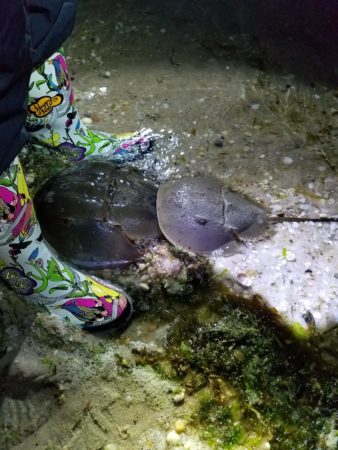
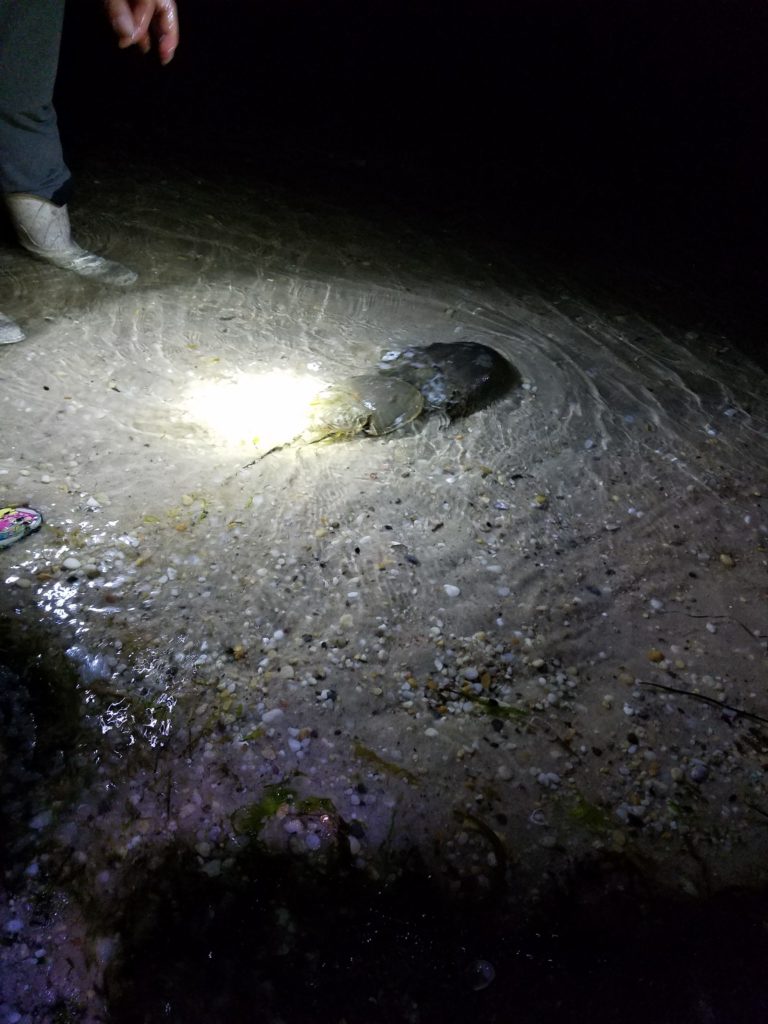
At the exact time of high tide, we began walking along a transect (a straight line of a known distance) along the beach in search of horseshoe crabs to count, measure, and tag. It’s so exciting to spot a horseshoe crab on a monitoring night, and something everyone on Long Island should experience. The females are significantly larger than the males, and there are much fewer of them. The males tend to follow and surround the females until they attach to mate, and they are surprisingly quick swimmers when they’re on a mission! Once a male is nearby, a female will begin to bury herself in the sand, usually in the “surf zone,” or where the waves are gently crashing on the beach and the sand is soft. The male will then attach himself to the female using claw-like appendages to grip her shell. The female lays her eggs in the sand, and the male releases sperm to fertilize them. Once the female has buried herself in the sand, we don’t disturb them, though we could still count them as a mating pair.
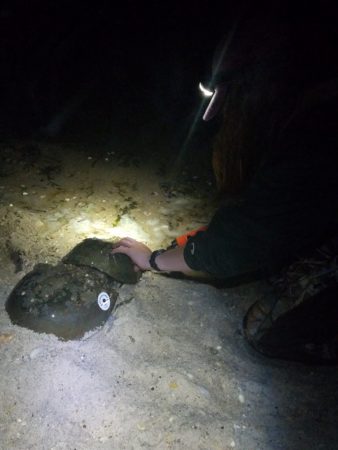
Instead, we measured and tagged pairs that were still swimming and attached, or swimming freely. Once we spotted a horseshoe crab, we would hold it gently with our hands or even with our boots. We used a large ruler to measure its width, then drilled a tiny hole in its shell with a power drill (don’t worry, it doesn’t hurt!). We carefully placed a small, round tag into this hole and recorded the tag’s I.D. number on the data sheet. If we see this particular horseshoe crab again we will see that it has already been counted and tagged and we can report where it was found. This helps the monitoring network track the population size and where the horseshoe crabs are spawning each year.
As one of PEP’s citizen science programs, volunteers were welcome to join us and participate, which was a lot of fun for all of us! Volunteers were offered the opportunity to have a more hands-on experience by recording data, or measuring and tagging the animals, making this program an exciting opportunity for the public to get involved in marine conservation and monitoring wildlife within their community. Some nights we saw very few, while other nights we would see about 20 at our monitoring site! Other sites have reported seeing hundreds, but you never know how many will be there on a given night until you check it out!
I truly loved being a part of this horseshoe crab monitoring program and my internship with PEP. I recommend this experience to anyone that is interested in science, nature, wildlife, or going for a group beach walk in the middle of the night. Check out the New York Horseshoe Crab Monitoring Network’s website to learn more about the program and find a location and time that works for you! http://nyhorseshoecrab.org.
Abigail Costigan, PEP Marine Conservation and Policy FellowContinue reading→

Plastic bag ban is an instrumental step to making our environment cleaner and our wildlife safer.Continue reading→

Watch this PEP presentation to learn about the projects we do and how you can get involved. During National Estuaries Week, we celebrate Estuary Day with Long Island Sound Study and South Shore Estuary Reserve to bring awareness to the work that we do as the Estuary Programs on Long Island and how you can...Continue reading→
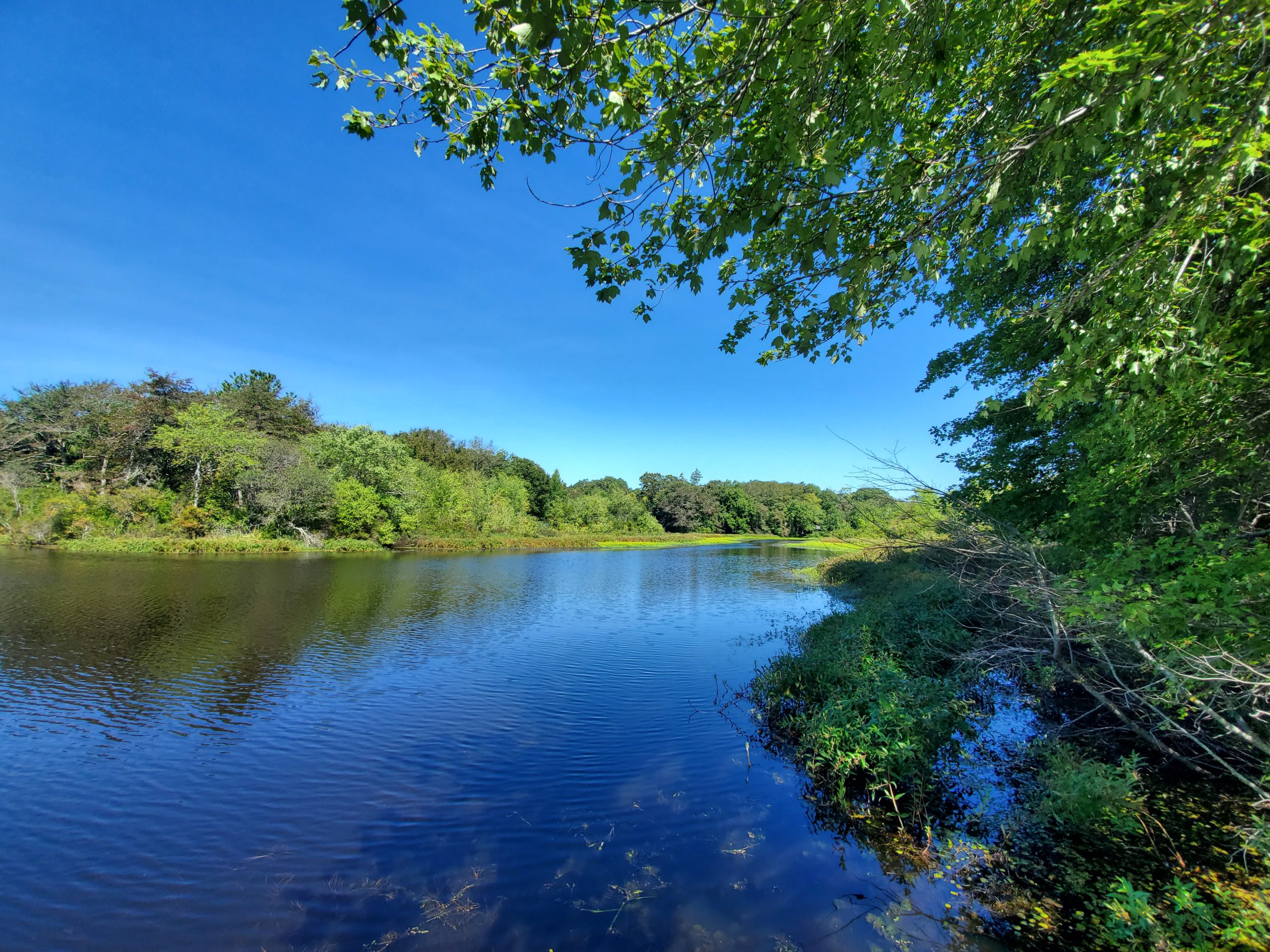
Suffolk County presents a workshop on the Septic Improvement Program at PEP’s August 2020 Citizens’ Advisory Committee Meeting. Learn what the program entails, how to apply, and feel equipped to take the next steps in upgrading your cesspool or septic system for cleaner water quality.
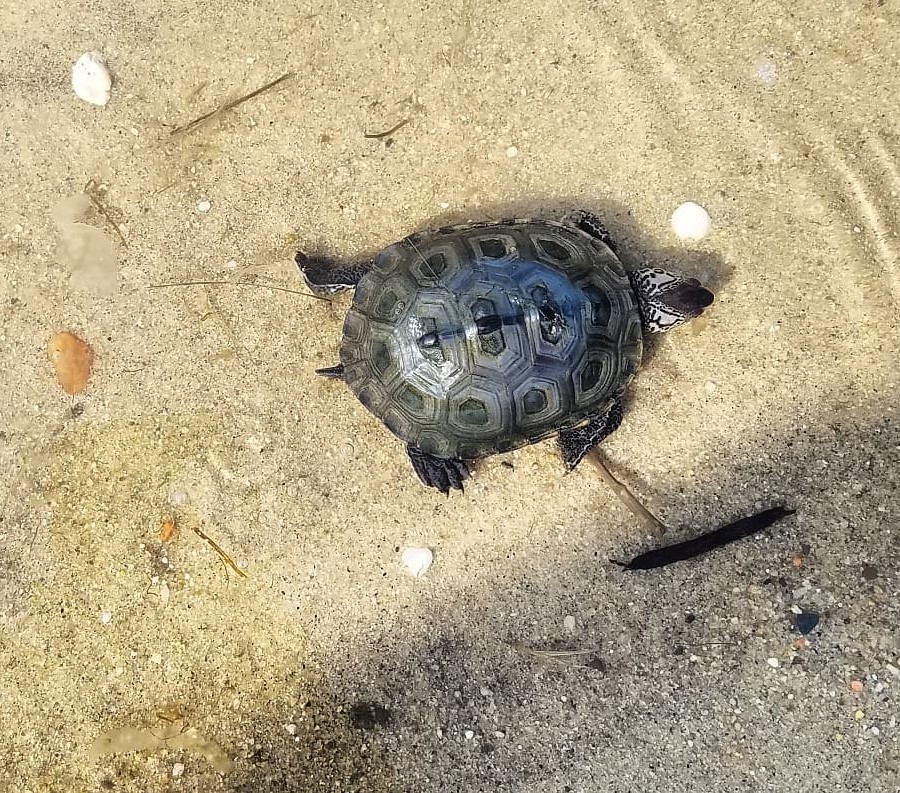
The Peconic Estuary Partnership, Seatuck Environmental Association, and Dr. Russell Burke of the Jamaica Bay Terrapin Project of Hofstra University hosted a virtual terrapin monitoring workshop where attendees learned about the importance of monitoring and how to identify terrapins and evidence of their activity. The workshop concluded with the unveiling of Seatuck’s Diamondback Terrapin Watch, which is an online survey...Continue reading→

Watch our May 2020 Citizens’ Advisory Committee Meeting co-hosted with Group for the East End, with guest speaker Rusty Schmidt, President of Long Island Native Plant Initiative (LINPI). Learn all about native plant species, where you can buy native plants, and how to get started on your garden. Native plants do not require fertilizer or...Continue reading→
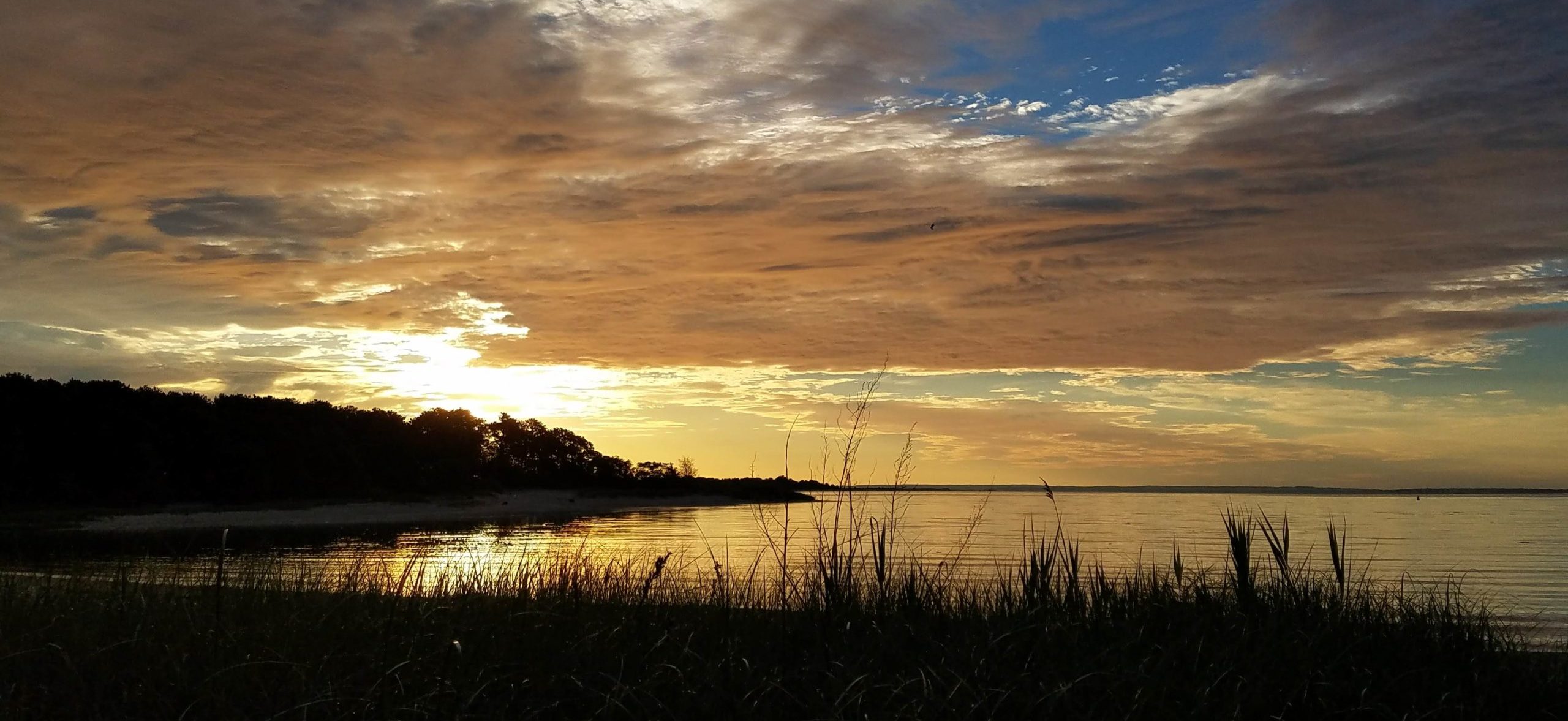
Due to the coronavirus (COVID-19) outbreak, the PEP offices are closed and all in-person meetings, events and activities are postponed until further notice to help reduce the spread of COVID-19. PEP staff are working remotely and can be contacted via email. As always, we will continue to share information about the Peconic Estuary through our...Continue reading→
2020 brings exciting news for the Peconic Estuary Program – a new name that better reflects the program and a soon-to-be launched revised Comprehensive Conservation Management Plan that includes fresh goals and actions for the next decade. As a National Estuary Program, the PEP brings together all members of the community – Federal, State and...Continue reading→

The Peconic Estuary Partnership, in response to the adult scallop die-off in the Peconic Bays convened a group of scientists, regulators and experts to assess the known and unknown factors that may have contributed to the demise of the Peconic Bay scallops in 2019 in the Peconic Estuary. This group, the Peconic Bay Scallop Technical...Continue reading→
February 21, 2020 PECONIC BAY SCALLOP TECHNICAL REVIEW COMMITTEE PROVIDES UPDATE ON THE 2019 ADULT BAY SCALLOP DIE-OFF In light of the recent information released regarding the work led by NYSDEC and the Marine Animal Disease Lab at Stony Brook University, the Peconic Bay Scallop Technical Review Committee would like to give the following update...Continue reading→
Sign up for News, Events and Information straight to your inbox.
