The Peconic Estuary Partnership and New York Sea Grant partner in the Shoreline Adaptation Initiative to:
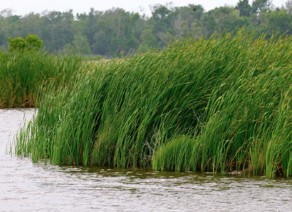
Nature-based solutions are shoreline protection methods implemented successfully nationwide and recently in New York. They mimic natural shoreline habitats to increase protection capabilities. Nature-based shorelines are site-specific and not appropriate for every shoreline.
Examples of nature-based solutions are marsh grasses, seagrass, kelp forests, oyster reefs, and sand dunes.
Hardened structures are the traditional method of shoreline stabilization. They are vertical, wall-like structures to hold land in place in response to wave energy and shoreline erosion. Hardened structures typically remove beaches or important ecological habitats, and disrupt the sediment movement, often resulting in increased erosion to unprotected areas.
Examples of hardened structures include: bulkheads, seawalls, and revetments, and can be made of wood, steel, concrete, or rock.
Hybrid stabilization methods utilize harder features in tandem with soft stabilization to improve erosion control on shorelines experiencing higher wave energy or erosion rates. The following are features of hybrid stabilization methods that may be an option on your shoreline:
Breakwaters are hard structures such as rock rubble, concrete chunks, or sheet piles placed offshore parallel to the shoreline to help stabilize the coast. They help to break up wave energy, reduce the impact of waves on the shorelines, and promote the accumulation of sediment landward of the breakwater, ultimately reducing erosion. Plant roots that are shielded by breakwaters can hold onto sediment that the breakwater has diverted, helping to strengthen the shoreline. Due to their durability, breakwaters are suitable for higher-energy shorelines. Additionally, they function as habitat for local species including filter feeders. Installation of breakwaters requires a permit, and landowners will need outside assistance from a land surveyor or marine contractor. These structures require moderate maintenance after storm events.
Shell bags are netted bags holding recycled oyster shells, concrete, or rocks. These bags are placed on the seafloor and can promote growth of shellfish. Installation of shell bags requires a permit and landowners need outside assistance from a land surveyor or marine contractor if they are being added to one’s shoreline. These structures require routine inspections. *Spat on shell is currently only used in pilot projects and reviewed ona case by case basis.
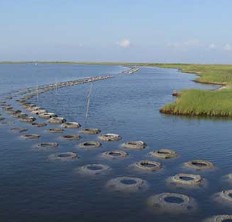
Reef balls are hollow spheres of porous concrete placed parallel to the shore that provide a habitat for marine life and reduce wave energy. The porous material allows shellfish to attach and grow and the inside of the sphere can act as a protective home for marine species. Reef balls are similar in function to breakwaters; however, they require little to no maintenance. Similar to other hard structures, a permit is necessary to install reef balls and professional assistance from a land surveyor or marine contractor is required.
Articulated blocks or mats are a matrix of uniform concrete blocks connected by cables and laid on the shoreline. These mats provide erosion control and stabilization by holding the land in place. Typically, cinder blocks are used, and vegetation will grow in between crevices. A permit is necessary and depending on the size of the project professional installation may be necessary, however, small areas can be laid by hand. If this is a large project and professional installation is necessary, reach out to a marine contractor and land surveyor.
Riprap or a revetment consists of pieces of concrete or stone placed on the shoreline to reduce erosion and break waves. Riprap is similar to a breakwater; however, it is placed on the shoreline while the latter are placed near or offshore. Installation of riprap requires a permit and professional assistance from a land surveyor or marine contractor. These structures are low maintenance and may require occasional removal of debris.
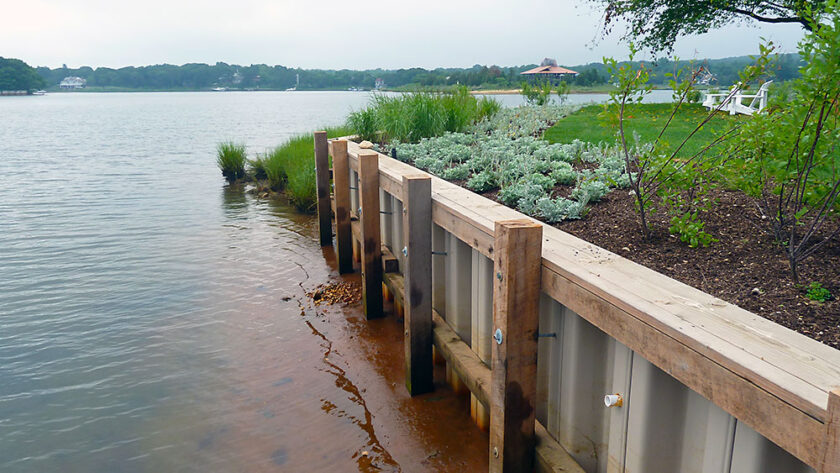
Low sill bulkheads designed to encourage ecological benefits by incorporating habitat enhancements or serving as a base for vegetative growth such as landward marsh plantings, are considered a hybrid living shoreline example. With a smaller vertical profile compared to traditional bulkheads, low sill bulkheads allow for more regulated inundation cycles landward. The guiding principle of design emphasizes the “minimum amount of structural components necessary” to achieve the project’s objectives in a hybrid approach.
Shorelines that already have an erosion control structure such as a bulkhead, riprap, or seawall can be adapted by:
1. Retrofitting or adding nature-based stabilization techniques to the shoreline without removing the current structure.
Hybrid stabilization retrofitting can be applied to shorelines experiencing higher wave energy and erosion by utilizing marsh grasses, oyster bags, or other hybrid techniques to help protect the base of the hard structure and increase its lifespan.
2. Removal and replacement of the current hard structure. Bulkhead removal is a viable solution for larger spans of shoreline where hardened structures are not currently necessary to protect infrastructure. This solution can restore coastal processes, bring sediment cycling back to the area, restore vital habitat and enhance shoreline resilience. To restore coastal processes longer spans of soft linear shoreline are needed without disruption from a bulkheaded area. This encourages parcel owners to work together to avoid future natural process damage caused by a single hardened structure and communally remove hardened structures.

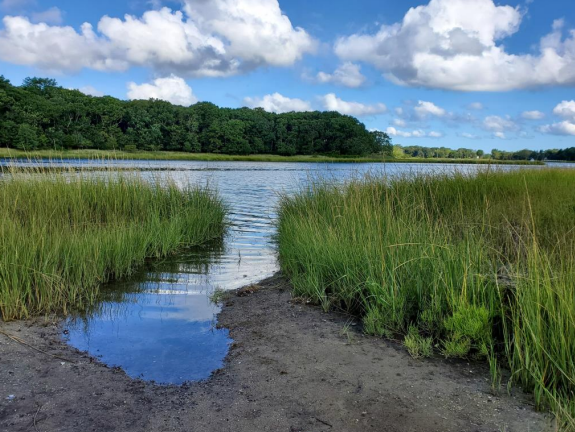
Nature-based shorelines can provide a habitat for birds and marine species.
Natural shorelines (like marsh grasses) help maintain the physical and biological functions of the environment.
Nature-based environments allow for gentle sand movement, rather than blocked or completely redirected by bulkheads.
Nature-based environments allow for water quality improvement by the native plants and animals, such as shellfish, filtering nutrients out from the land.
Bulkheads are initially more durable. However, bulkheads have shorter lifespans compared to other materials that degrade from exposure to wind, wave action, and weather.
Natural shorelines need time to establish themselves in the environment. However, once established, natural shorelines are more resilient to wind, wave action, and weather.

Implementing nature-based shorelines are cost-effective compared to building hardened structures, such as bulkheads.
Nature-based shorelines materials are more affordable and require lower, long-term maintenance.
Bulkheads require more repairs and replacement because they have shorter lifespans, resulting in higher long-term expenses.
Nature-based shorelines can improve the coastal economy of Long Island by promoting the growth of fisheries and increasing shoreline access for recreation and tourism.