
The following is the result of work funded by the New York State Department of Environmental Conservation conducted by the Peconic Estuary Partnership and New York Sea Grant to identify barriers to implement shoreline adaptation methods, such as nature-based features. It compiles information obtained through conversations with various stakeholders involved in shoreline permitting and policy, including federal, state, and local regulators. Its contents are to be used for informational purposes to assist with understanding and adapting, if needed, the process of shoreline adaptation in the Peconic Estuary.
This document was made possible by the participation of partners including regulators, policy makers, implementors, and committee members across six towns, New York State, and Federal Agencies. We thank all stakeholders who participated in interviews, meetings, and workshops. Special thanks to the external reviewers who contributed to the betterment of this.
This report was developed by the Peconic Estuary Partnership and New York Sea Grant’s
interpretation of discussions with various local, state, and federal stakeholders. The
report is for informational purposes and reasonable efforts have been made to include
accurate and up-to-date information at the time of publication. For current versions
of regulations and permitting requirements, consult with specific agencies.
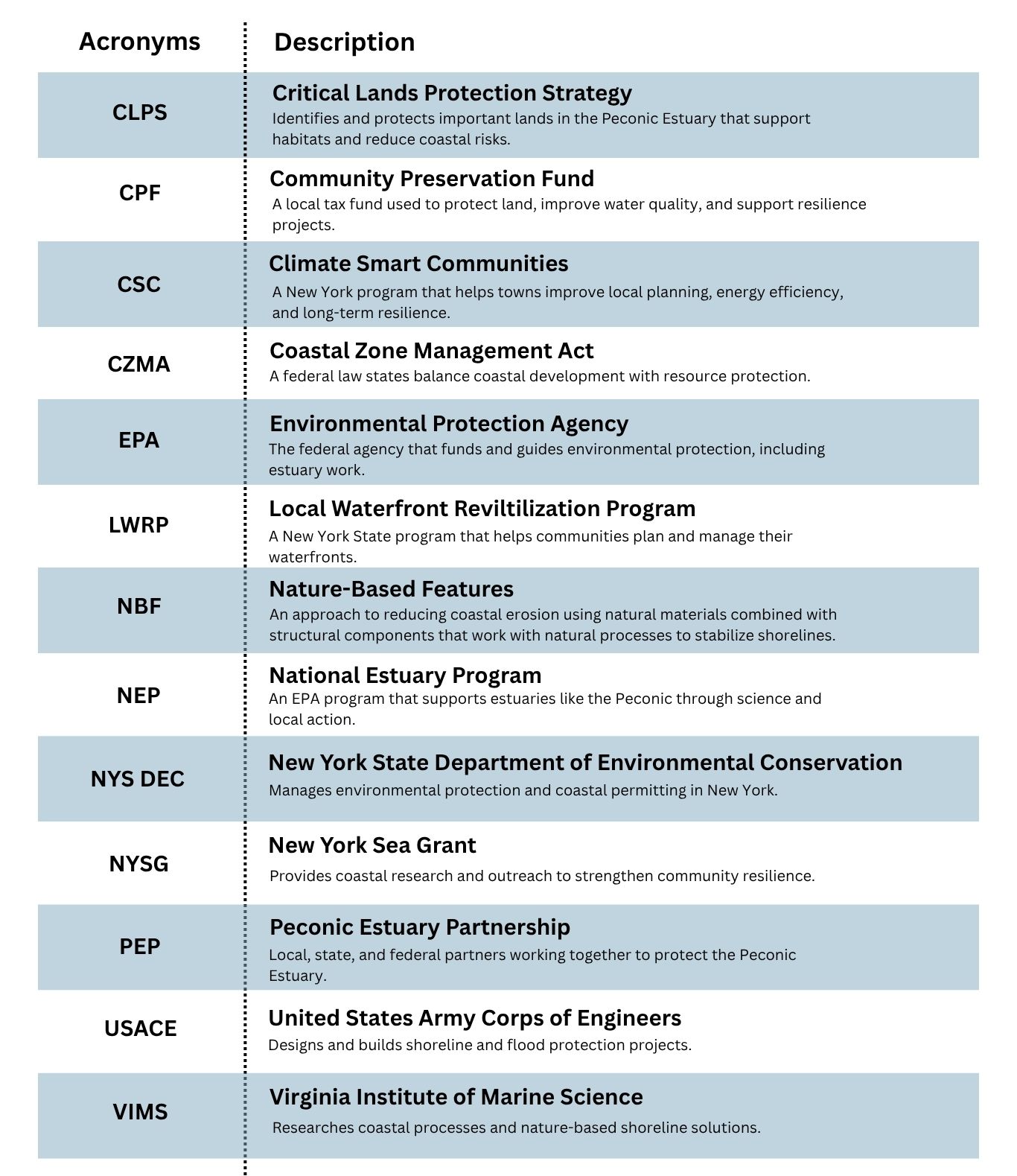


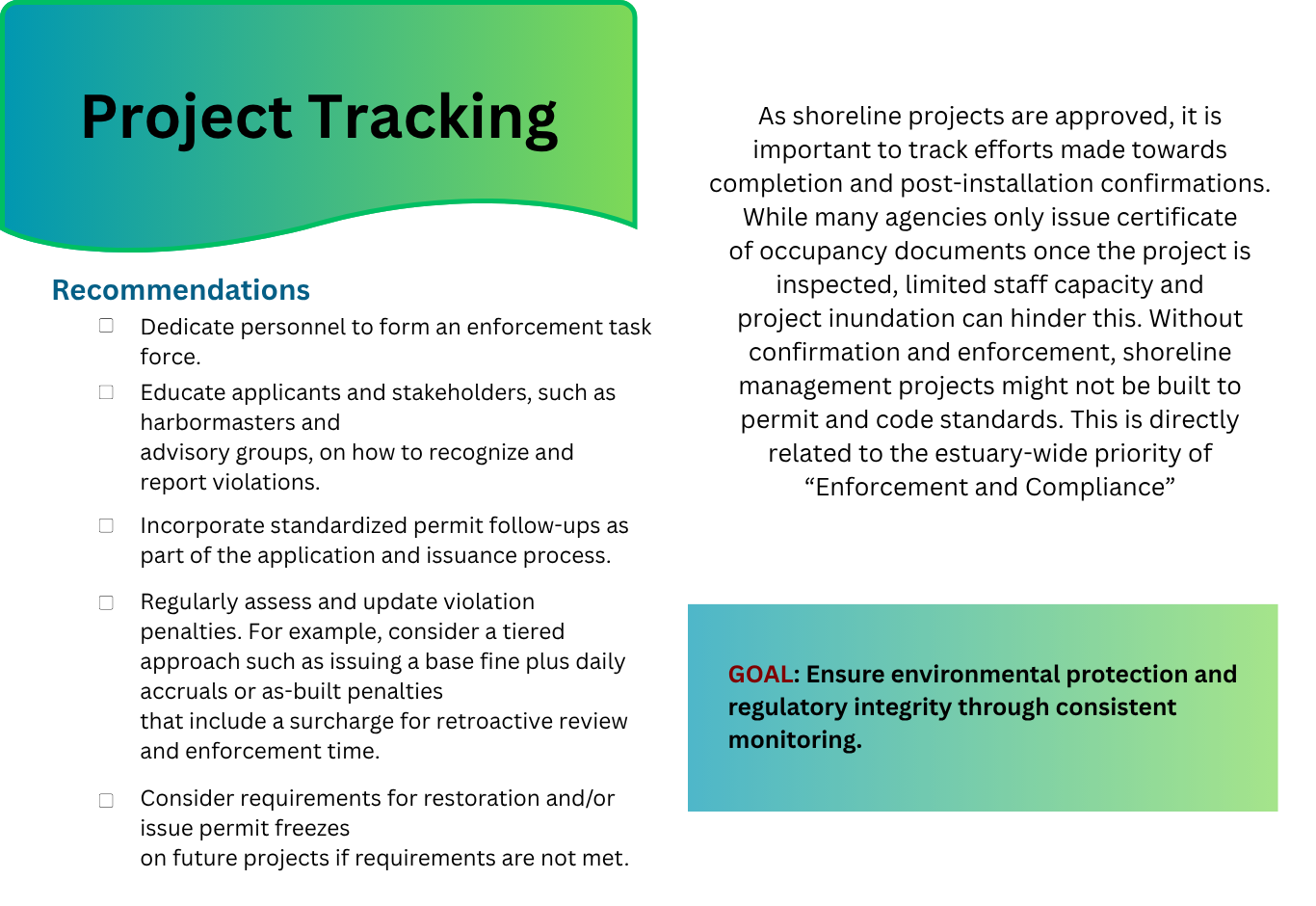
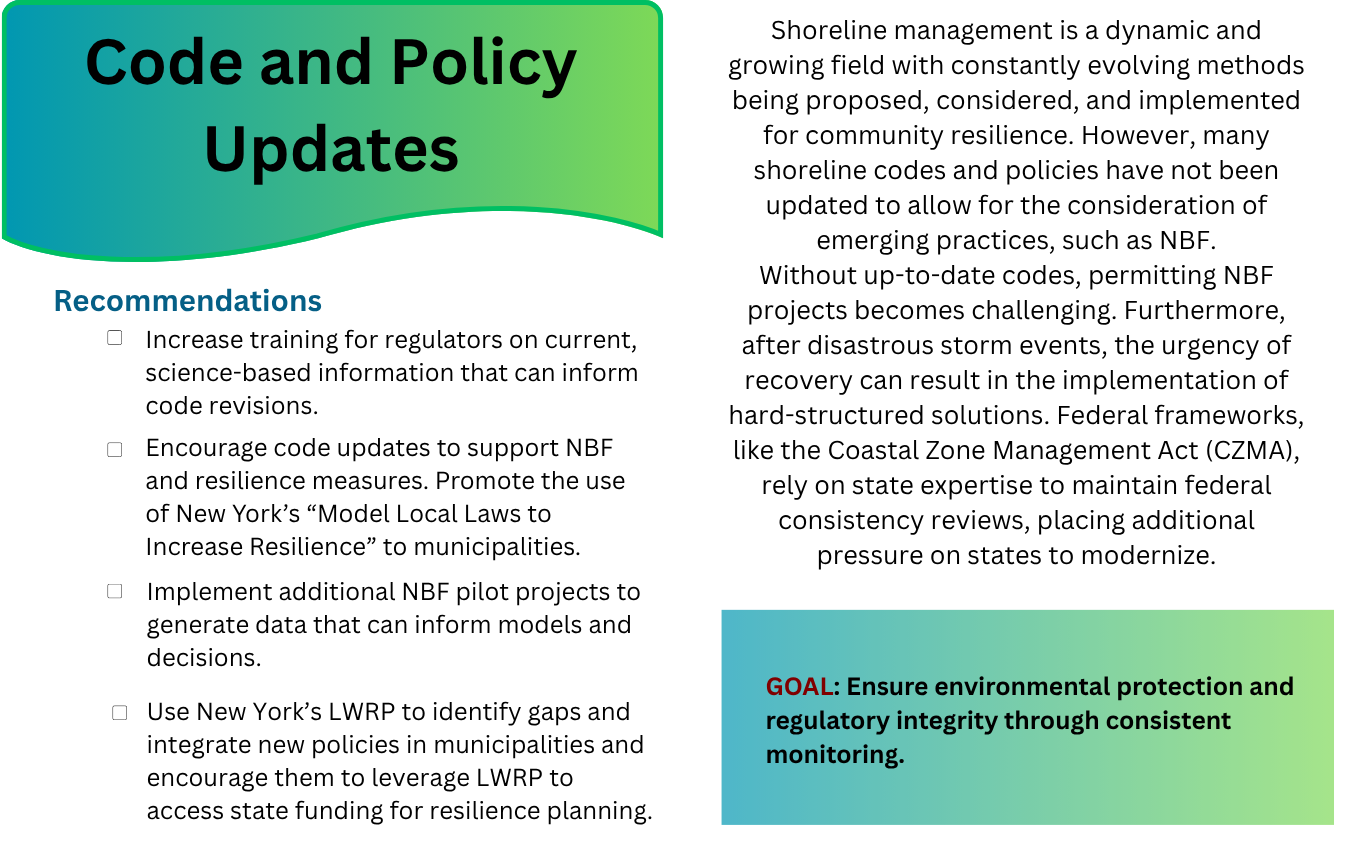
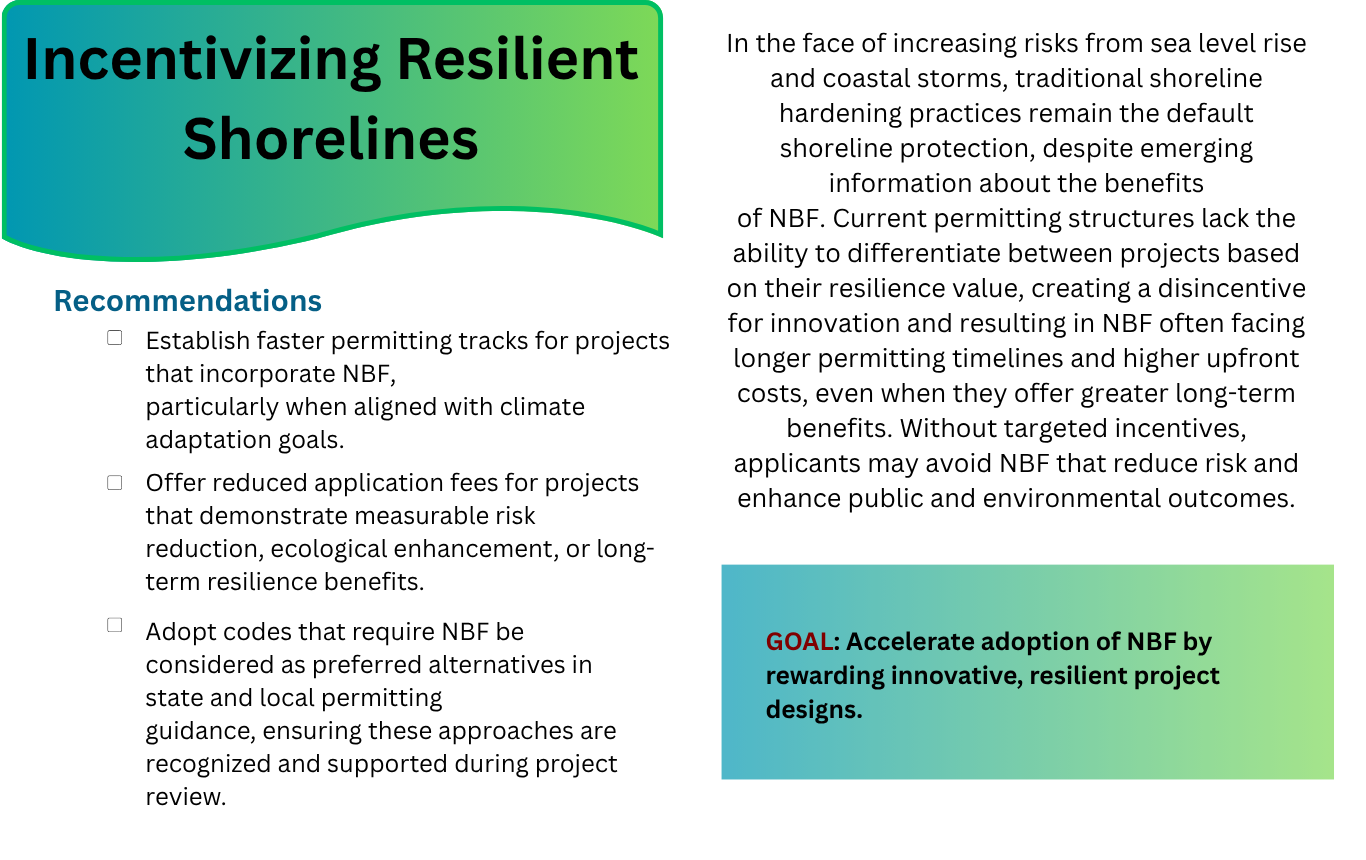
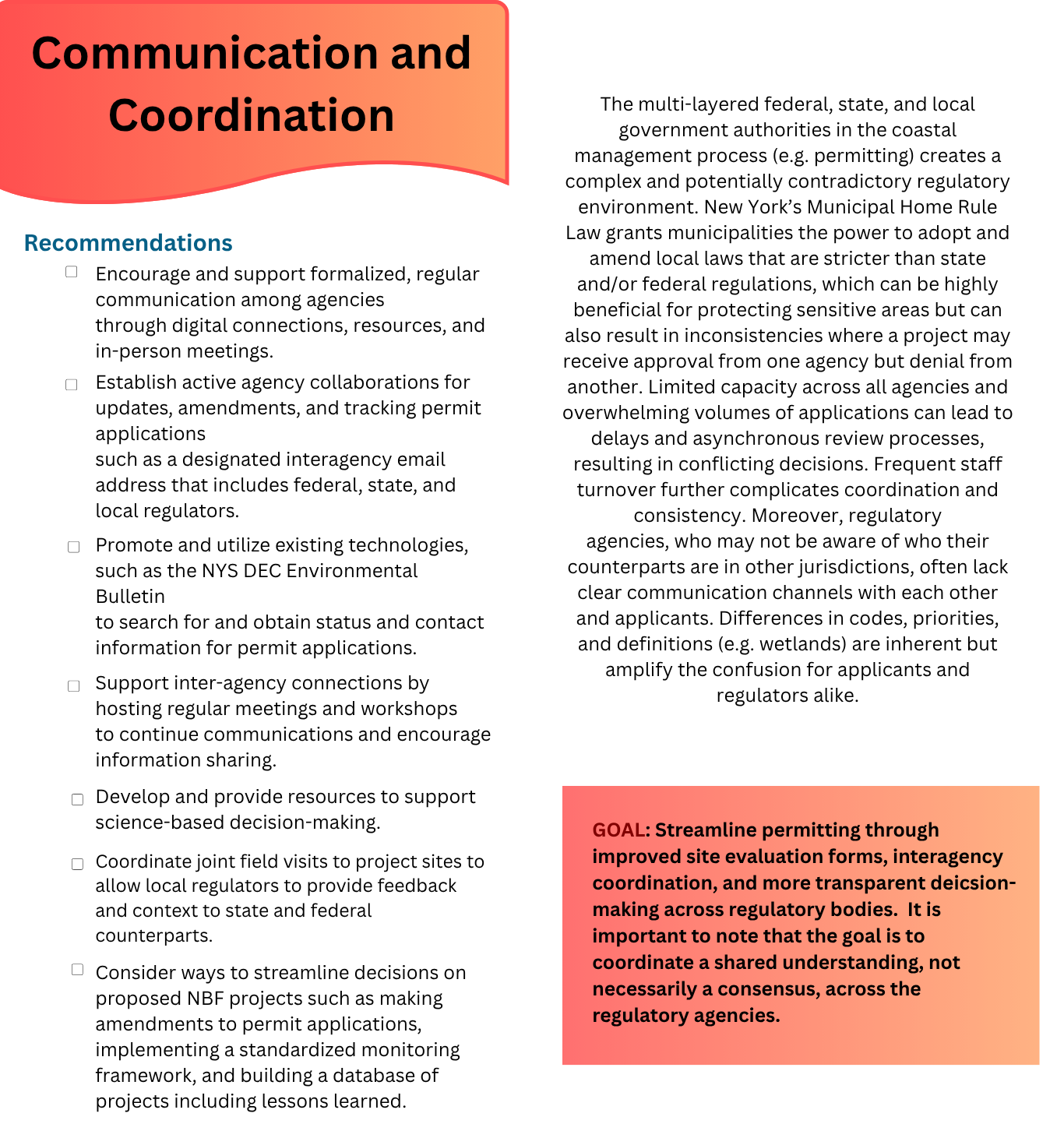
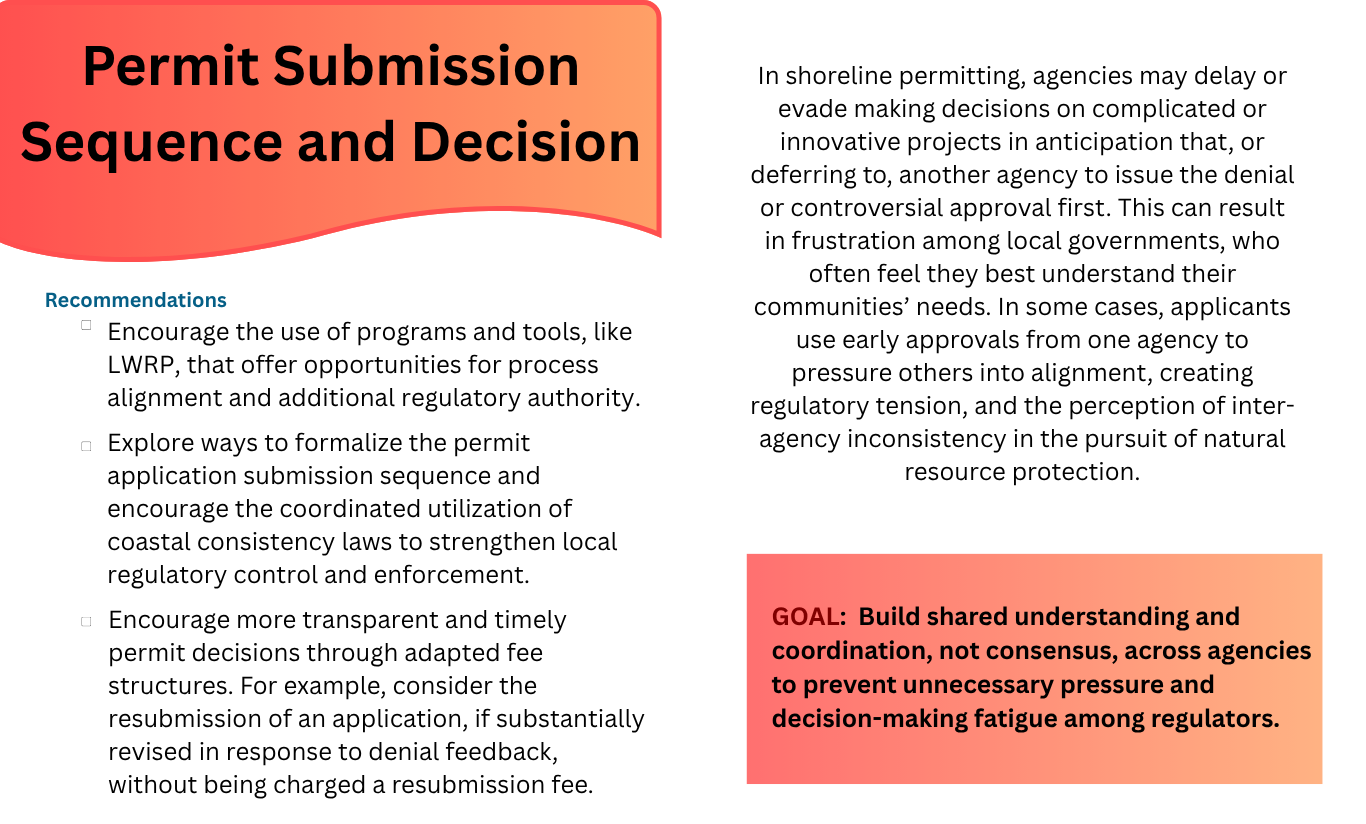

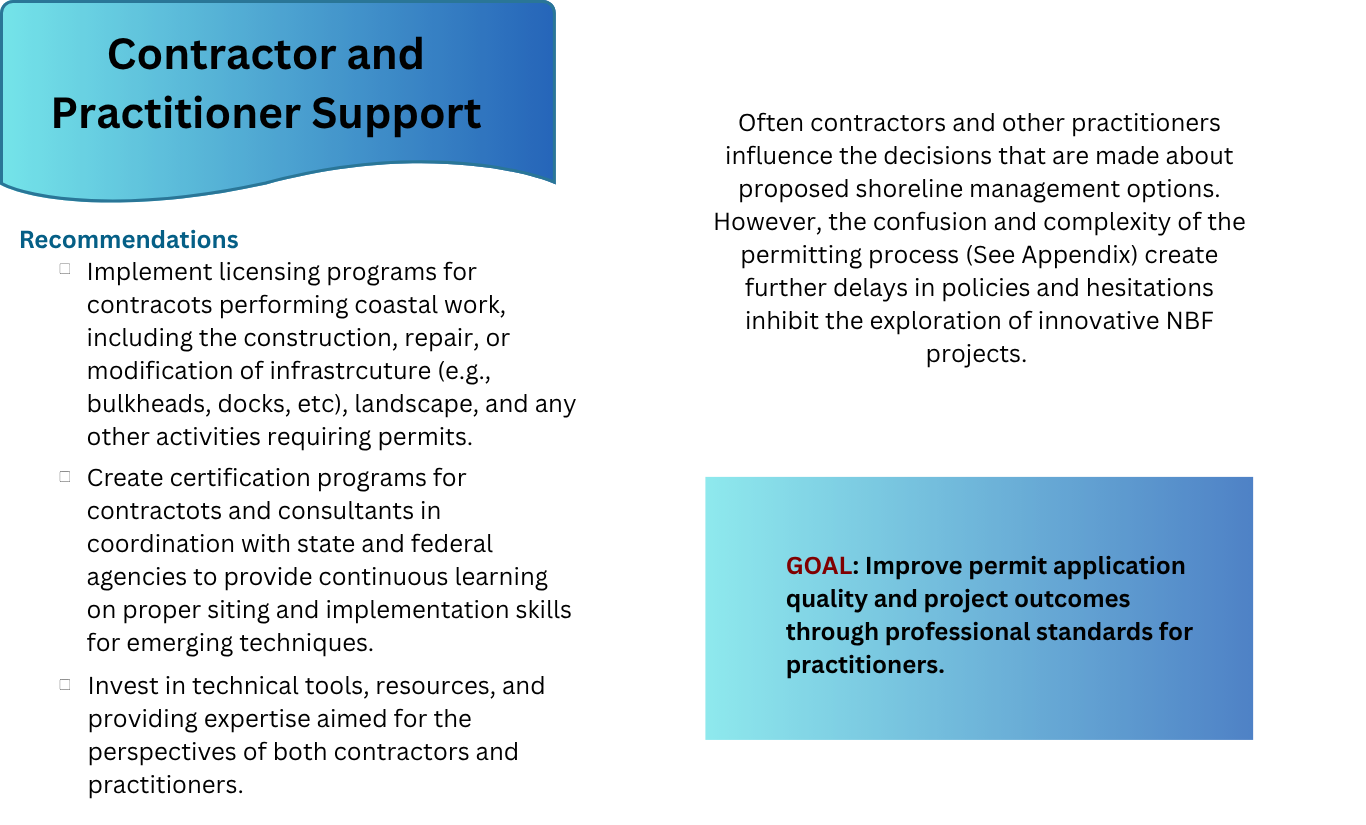

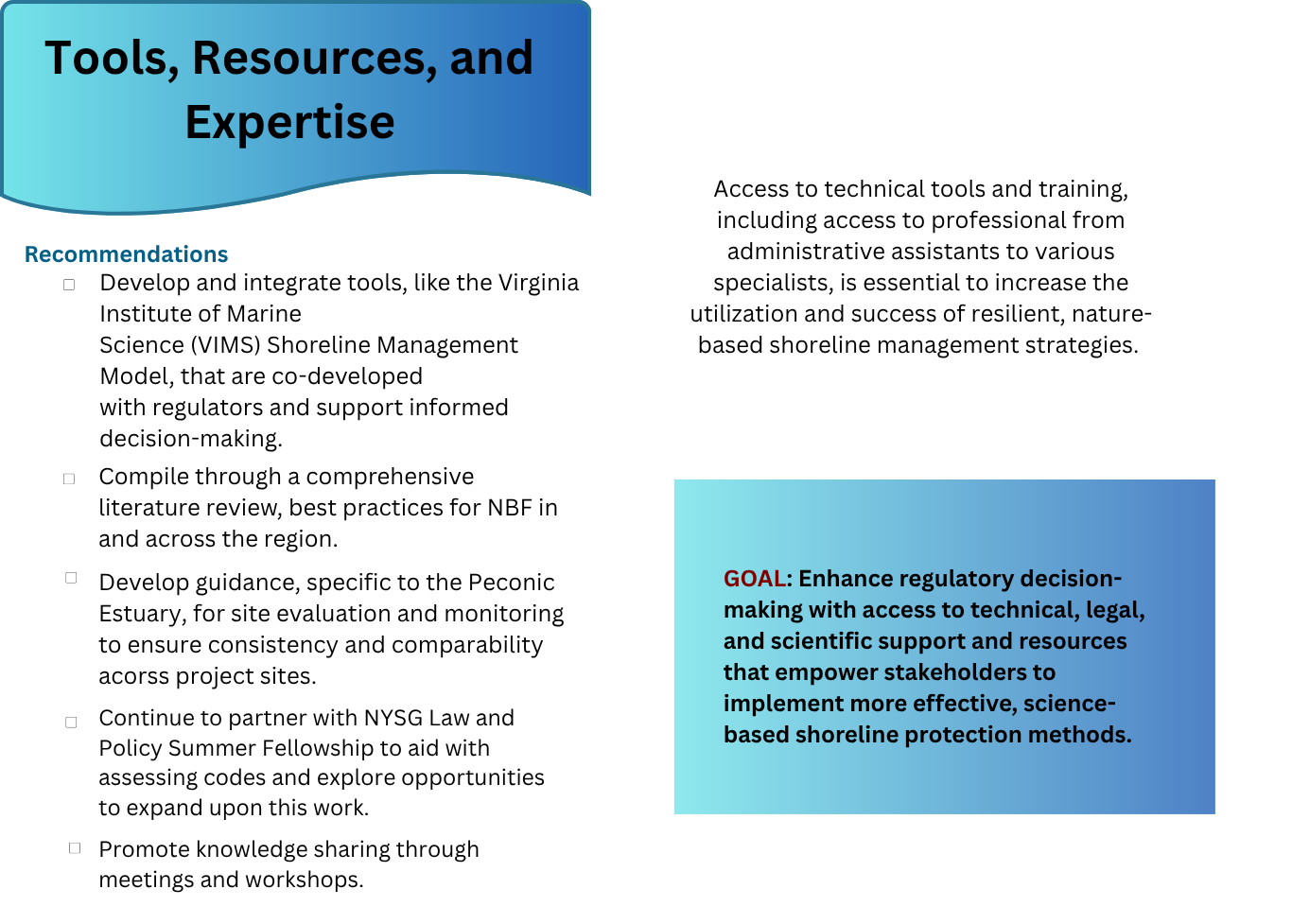


While the Peconic Estuary’s shorelines are an invaluable ecological resource, the adjacent coastal communities are facing the growing impacts of sea level rise and storms. The Shoreline Adaptation Initiative has demonstrated that while the region’s regulatory and management systems are complex, there is a strong foundation of collaboration, expertise, and commitment among local, state, and federal partners to advance resilient shoreline practices. Through interviews, workshops, and collaborative discussions, this effort has identified both challenges and clear opportunities for progress. The findings reaffirm that early engagement in the permitting process, consistent interagency communication, strengthening institutional knowledge, and assessing shoreline codes are essential to supporting NBF projects that balance protection, habitat value, and long-term resilience. Importantly, the progress already achieved—including code reviews, process amendments, and improved coordination—illustrates that meaningful change is both possible and underway. Moving forward, continued collaboration will be critical. Implementing tools such as the Peconic Estuary Shoreline Site Suitability Model, standardized monitoring protocols, and expanded education resources will ensure that shoreline adaptation is guided by science, transparency, and shared learning. These collective actions will continue to build the foundation for an adaptive, informed, and coordinated regional approach that prioritizes NBF, protects natural shorelines, and sustains the ecological and community integrity of the Peconic Estuary.
If you have any further questions, please contact:
Jade Blennau – Coastal Resilience and Communities Coordinator, Peconic Estuary Partnership, jade.blennau@stonybrook.edu
Funding
This report is a product resulting from a project memorandum of understanding with the State
of New York acting through the Department of Environmental Conservation funded under award
DEC01-C01674GG-3350000 and Cornell University on behalf of New York Sea Grant.

