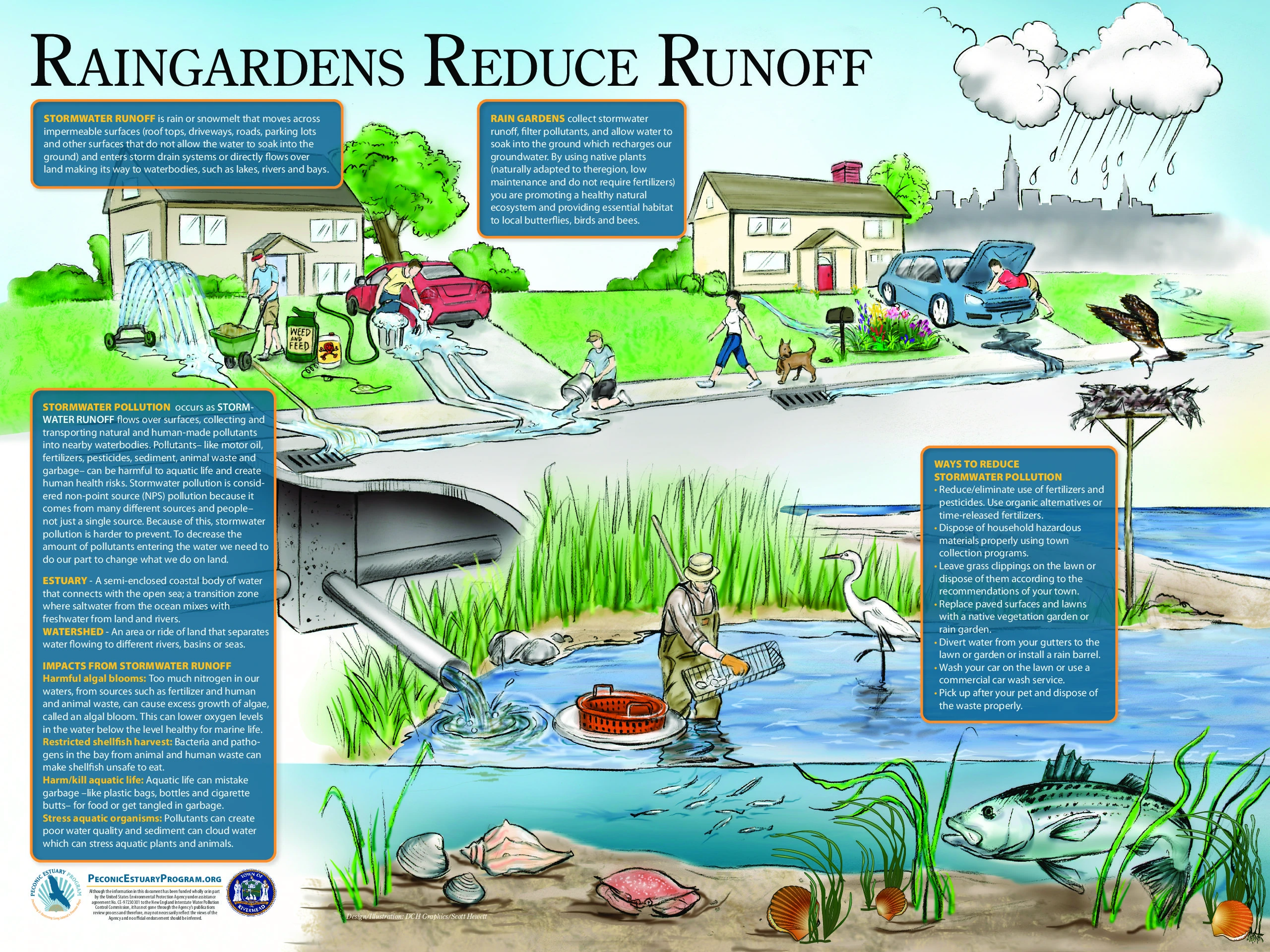
Stormwater is water from rain and snow that moves across impermeable surfaces (roof tops, driveways, roads, parking lots and other surfaces that do not allow the water to soak into the ground). This water flows along or runs off impermeable surfaces and enters storm drain systems or directly flows over land making its way to waterbodies, such as lakes, rivers and bays. Stormwater pollution occurs as stormwater runoff flows over surfaces, collecting and transporting debris, natural and human-made pollutants into nearby waterbodies. Debris and pollutants carried by stormwater– like motor oil, fertilizers, pesticides, sediment, animal waste and garbage– can be harmful to aquatic life and create human health risks. Stormwater pollution is considered non-point source (NPS) pollution because it comes from many different sources and people– not just a single source. Because of this, stormwater pollution is harder to prevent.
Once roads became paved for automobile use, less rainwater was able to soak into the ground causing an increase in stormwater runoff. As development increases and more roads, shopping centers and homes are built, stormwater runoff becomes a more pressing issue. The more impervious surfaces, the less area there is for the water to infiltrate back into the ground. And the more pollutants that are applied, produced or used, the more contaminated the stormwater will become. Over 90% of stormwater drains on the East End of Long Island discharge directly in the local bays without being treated.