
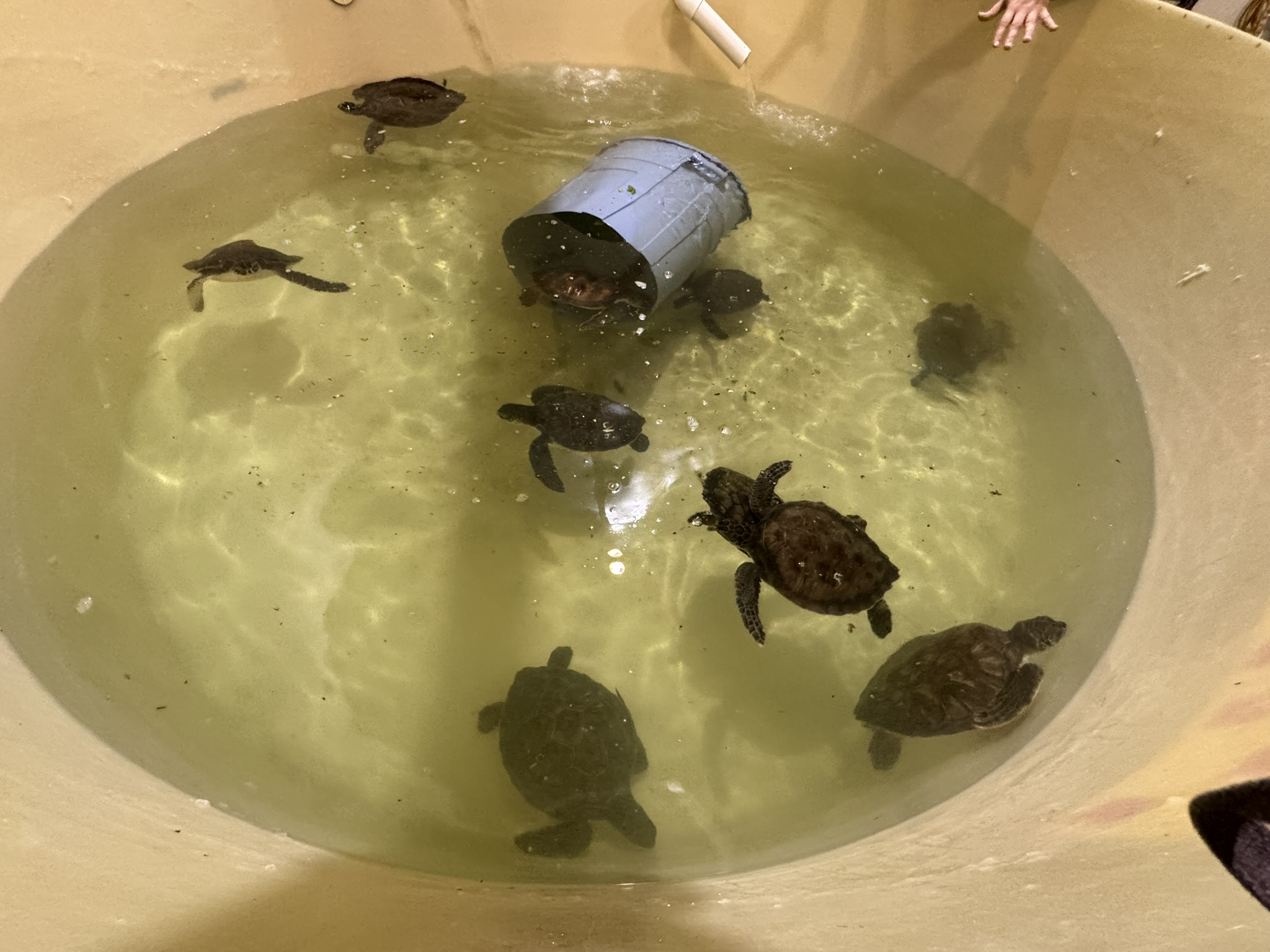
With a total of 15 cold-stunned sea turtles tagged, NYMRC was able to track and monitor sea turtle movements throughout New York and beyond.
Understanding the health and behavior of these species, particularly in regions with high human activity, is essential for assessing the impacts of anthropogenic stressors and guiding effective conservation strategies.
Past work has confirmed that New York’s coastal and estuarine waters serve as key seasonal habitat for:
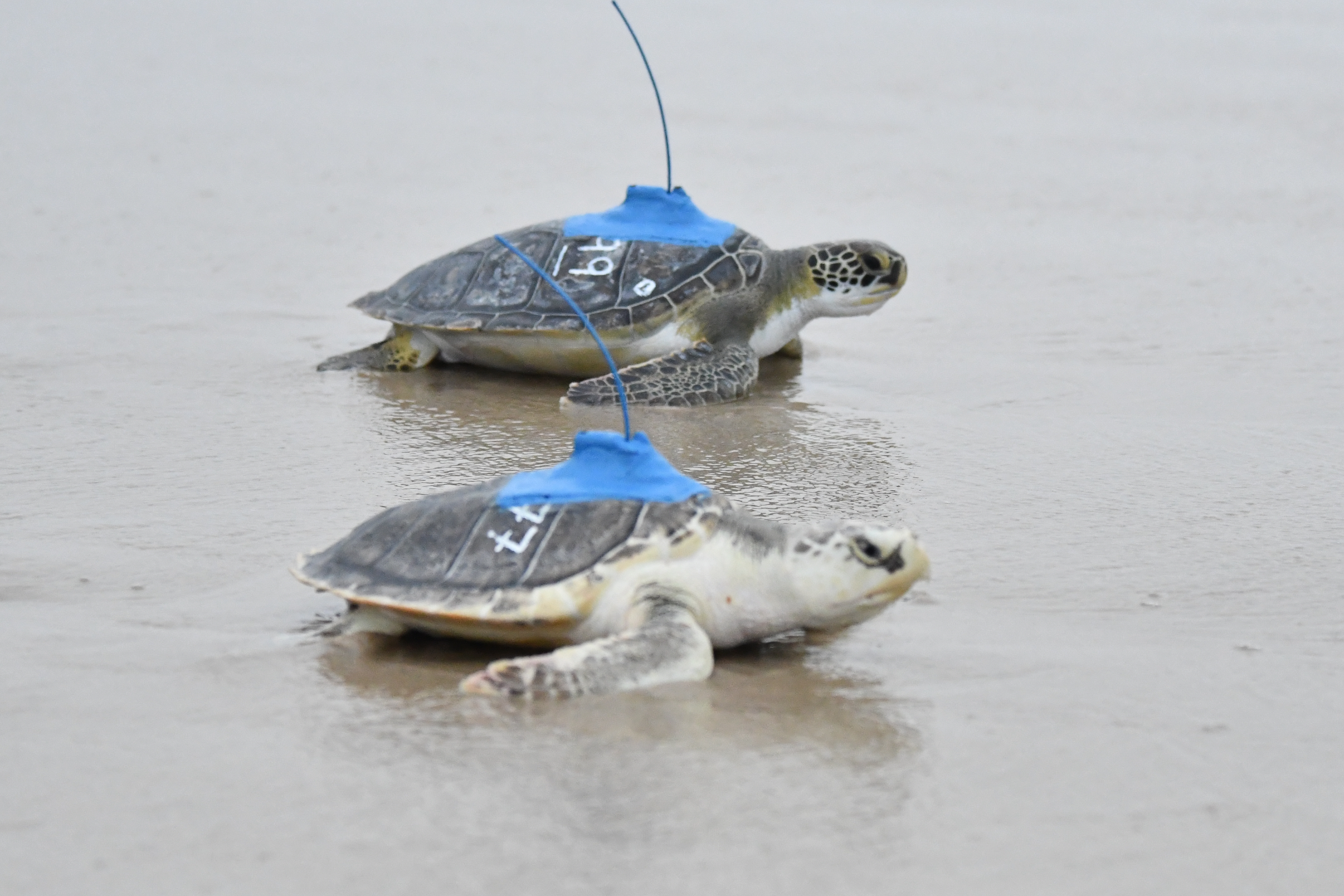
Turtles that were rescued, rehabilitated, and released were tracked with support from PEP. Computers satellite tags enabling monitoring of post-release movement behavior on green sea turtles. Satellite tags provide long-duration (year+) intermittent information on the geographic position, dive profile, and sea water temperature of the animals.
Above: 90+ day time lapse of 15 PEP-tagged sea turtles.
The presence of eelgrass beds and other submerged aquatic vegetation (SAV) were shown to be an important forage resource for juvenile green turtles.
This plays a key role in retaining individuals within these nearshore habitats post-release. These findings highlight the ecological importance of coastal estuarine systems to the life history of green sea turtles, emphasizing that New York waters are not merely ‘transitional zones’ but are functionally significant developmental habitats.

